
16 Days of Activism: stakeholders call for stronger regulation of digital space in Taraba

16 Days of Activism: stakeholders call for stronger regulation of digital space in Taraba
By Sylvanus Viashima, Jalingo
As part of activities to mark this year’s 16 Days of Activism Against Gender-based Violence in Taraba State, stakeholders have called on the State government to come up with clear roadmap that will regulate the digital space and curtail cyber bullying and other forms of violence especially against women and girls.
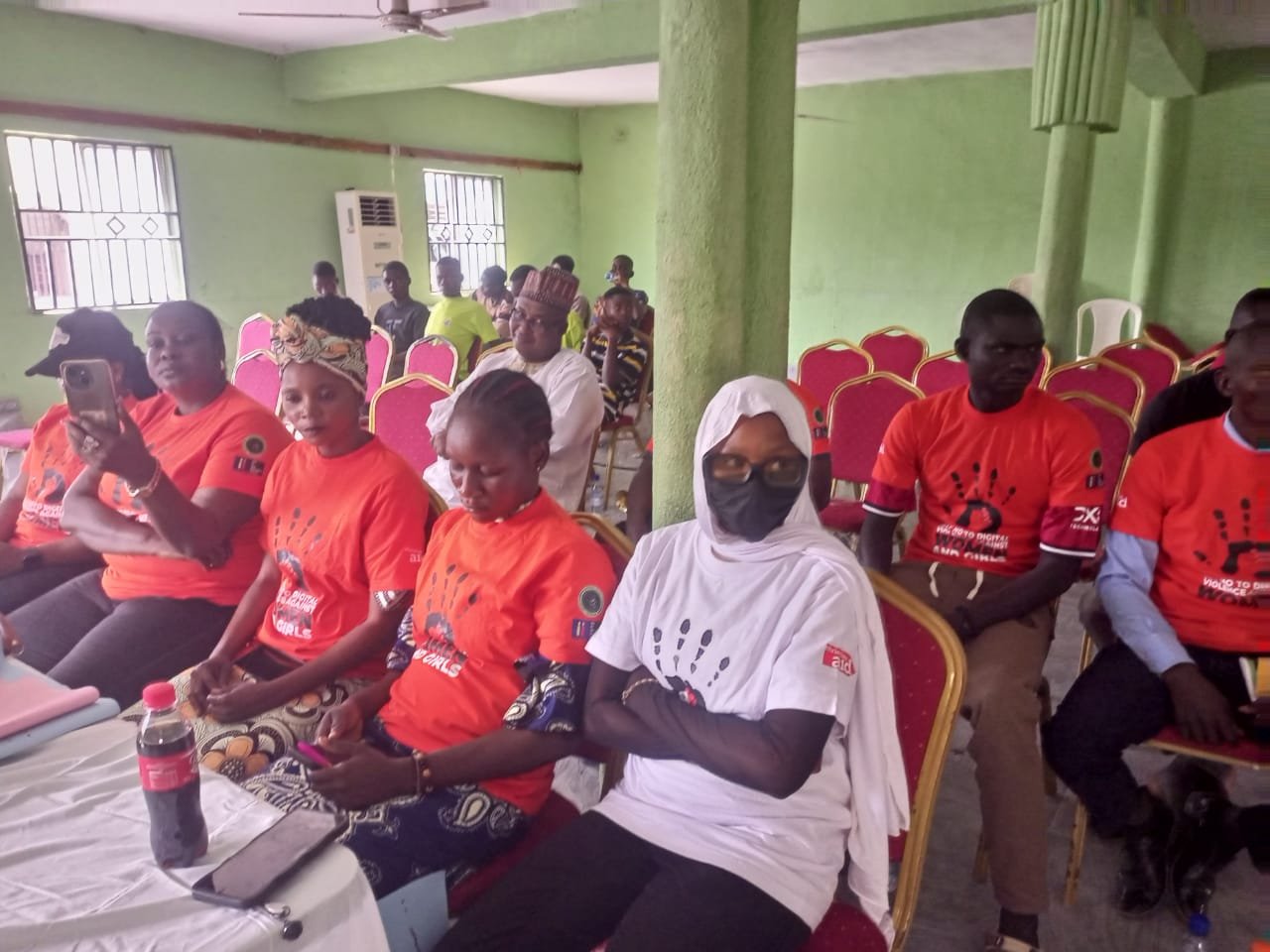
The stakeholders convened at a workshop organised by a Non Governmental Organisation NGO Side By Side Faith Movement with other collaborators.
The Kuru Kona HRH Augustine Njemang Vengkani ll in his remarks called on the State House of Assembly and other relevant institutions to provide a legal framework that will regulate the Social Media space and the general use of mobile devices by young people and children.
Kuru Vengkani noted that “We have been using the digital space without paying sufficient attention to the negative aspects of this wonderful innovation. This workshop opens our eyes to the consequences of wrong usage on our youths especially the women. As a Chiefdom, we will take up this campaign and ensure that it reaches every nook and cranny of our Chiefdom. It is an awareness that is indispensable. Let me use this opportunity to call on the government to come up with laws to regulate phone usage especially by the underage to curtail the level of violence and criminal activities on our digital space”.
Princess Leah Solomon Olusiyi, the Taraba State coordinator of Side By Side in her remarks said that “Every year, the 16 Days of Activism begins on November 25, the International Day for the Elimination of Violence Against Women, and ends on December 10, Human Rights Day. These dates are a reminder that violence against women is not a private matter-it is a violation of fundamental human rights, and we must all take responsibility to stop it.
“This year’s global theme, “UNITE to Stop All Forms of Digital Violence Against Women and Girls,” speaks directly to the new and growing dangers women and girls face in the digital world. While digital technology has created opportunities for learning, communication, and empowerment, it has also opened the door to a new form of abuse one that many people still do not fully understand.
“Today, one of the main reasons we are here is to help our communities understand what digital violence really means. In simple everyday language, digital violence happens when someone uses a phone, computer, internet, or social media to harm another person. It includes things like online insults, harassment, threats, sharing someone’s pictures without permission, blackmailing them with sensitive images, spreading false information, or using phones to monitor and control their movements.
“Digital violence may not leave physical injuries, but the emotional and mental pain can be even more damaging. Many young girls experience shame, fear, depression, and isolation because of digital abuse. Some even stay away from school, religious activities, or leadership roles because of what they experience online.
She said that in other to tackle the menace, “children should not be left alone with phones without guidance. Families must teach girls and boys about safe online behaviour, monitor what their children do on social media. Communities and religious leaders must speak openly about digital violence, while the state must have clear policies that punish online offenders and protect survivors without exposing them to shame.
“NGOs and community organizations must continue offering safe spaces where women can report digital violence without fear. Counselling, awareness, and digital literacy programs are essential, and all of us must learn to use digital devices responsibly. Before forwarding a picture, message, or rumour, we must ask ourselves: Does this harm someone? Would I want this done to me? We must promote positive content and discourage online shaming”.
The State Commissioner of Basic and Secondary Education Dr Augustina Godwin while addressing the participants as educators and care givers, teachers have a responsibility to take holistic care of children in their care both within and outside the school premises and as such prioritise their welfare and tackle any issue that poses any danger to the children with every sense of responsibility.
“I am confident that if this number of participants will carry this campaign to their friends and contemporaries, more girls will become conscious of their usage of the digital space especially the Social Media Platforms. This Side By Side Faith Movement is helping tremendously to do most of the work we should be doing at the ministry through our schools. We must protect our children and women. The emphasis is on women and children because they are the most vulnerable. This does not in anyway, suggest that less attention should be given to the male child. As a matter of fact, we have a duty to bring them up knowing that bullying in any form or for any reason is inexcusably irresponsible and unacceptable” she said.
Read Also: Yobe police command assures to champion efforts to eliminate GBV
Participants at the workshop came to an agreement after a heated debate that the New Media has several disadvantages but proper orientation on its usage will go a long way in ensuring that it’s enormous advantages are not overshadowed.
Representatives of both the Christian and Muslim faiths who spoke at the programme describe it as a major eye opener and commended the organisers for their thoughtfulness and contribution to ensuring a better society for all.
One of the co-conveners Mr Samuel Tari emphasize that “Violence now is not only on our streets and in the homes but right in our hands. The mental trauma caused by digital violence can have much more lasting impact on the victims than even physical violence. Let us not also forget that it can create room for physical contacts and physical violence. We must watch our digital space carefully and consciously”.
