
Rebuilding public trust in government communication

Rebuilding public trust in government communication
By Collins Yakubu-Hammer, News Agency of Nigeria (NAN)
Over the years, analysts have expressed concern over declining public trust in government information and communication in Nigeria.
Many Nigerians have stereotyped official information as untrue or as narratives crafted to defend government deficiencies or those in positions of authority.
While a significant number of citizens lost confidence in public information over time, others remained hopeful that government communication would improve if the right individuals were entrusted with the responsibility.
The Ministry of Information and National Orientation, restructured by President Bola Tinubu in 2023, is charged with managing public information and orientating Nigerians in line with national values and the Renewed Hope Agenda.
The ministry is regarded as the most authoritative channel through which government communicates with citizens and the international community.
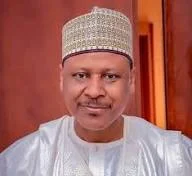
Following his appointment as Minister of Information and National Orientation on Aug. 21, 2023, Alhaji Mohammed Idris pledged not to lie to Nigerians, promising to speak frankly regardless of vested interests.
Observers note that Idris is no stranger to communication, information management and public relations ethics.
He is a media professional, a Fellow of the Nigerian Institute of Public Relations (NIPR) and a former Secretary of the Newspaper Proprietors Association of Nigeria (NPAN).
Analysts believe that his calm disposition and pedigree as a non-confrontational image manager earned him the confidence that led to his appointment.
His declaration that he would not lie was initially received with scepticism by some Nigerians, who interpreted it cynically.
Idris later clarified his mandate at the 60th anniversary celebration of the NIPR in Abuja.
He said he had the blessing and approval of President Tinubu to speak truthfully, but in a manner that was clear and responsible.
According to him, the President directed that trust must be restored in public communication, stressing that credibility was essential for citizens to respect and engage with government messages.
Idris said it was always better to tell the truth, even when the facts were uncomfortable.
He emphasised that honesty and trust were indispensable to effective public communication, adding that he would rather remain silent than speculate on issues he had no facts about.
This commitment to restoring trust became a central pillar of his approach to managing Nigeria’s public image.
The President of NIPR, Dr Ike Neliaku, commended Idris during a courtesy visit, describing his approach as a clear departure from past practices.
Neliaku said previous image managers often resorted to misinformation to counter narratives already known to the public.
He described Idris as a valuable asset to the country, noting that while journalists pursued headlines, the minister focused on the long-term impact of information on the nation’s image.
Observers also cited Idris’ reaction to the reinstatement of the Kaduna State Ministry of Information by Gov. Uba Sani as an example of strategic communication.
Idris described the move as timely and strategic, commending the Kaduna State Government for reinforcing transparency and citizen-centred communication.
He said the development aligned with the Federal Government’s drive towards a unified and responsive information ecosystem.
Experts agreed that strengthening and unifying information structures was fundamental to effective communication management.
At the 48th Meeting of the National Council of Information and National Orientation, Idris urged state governments to strengthen the capacity of their information ministries to promote transparency, accountability and public trust.
He said that in a country with diverse ethnic groups, languages and religions, deliberate efforts were required to ensure that every citizen felt informed and included in governance.
Idris’ approach to public communication also came to the fore during a courtesy visit by the U.S. Ambassador to Nigeria, Mr Richard Mills, where issues bordering on visa policies and immigration were discussed.
He reaffirmed Nigeria’s commitment to continuous engagement with the United States and other international partners to promote mutual understanding.
Read Also: Federal University, Kashere, matriculates 3,368 students for…
Analysts particularly commended Idris’ response to allegations of religious persecution in Nigeria.
They noted that while he acknowledged the country’s security challenges, he maintained that Nigerians of all faiths were victims of terrorism and banditry.
Idris described claims of Christian genocide in Nigeria as false and misleading, saying they did not reflect the reality on the ground.
He stressed that no Nigerian official would deliberately support violent extremists to target any religious group.
He reaffirmed the country’s commitment to religious freedom and peaceful coexistence, describing Nigeria as a tolerant, multi-faith nation.
While acknowledging the impact of violent extremism, he noted that both Christians and Muslims had suffered losses.
Idris also used various platforms to explain government policies, their implications and expected benefits, including the removal of fuel subsidy, which he said had increased resources available to states for development.
He highlighted the establishment of oncology centres across the six geopolitical zones, major infrastructure projects such as the Lagos-Calabar Coastal Highway, the Sokoto-Badagry Super Highway and the Trans-Saharan Highway.
He also cited improvements in food supply, the impact of the Nigerian Education Loan Fund and gains recorded across several sectors.
Overall, analysts observe that Idris’ expertise in media, communication and public relations has contributed to restoring credibility and public trust in government information.
Today, many Nigerians regard official communication from the Ministry of Information and National Orientation as more credible and sincere. (NANFeatures)
