
A CONSENSUS FOR CONTINUITY: The case for Baba Malam Wali in Yobe 2027

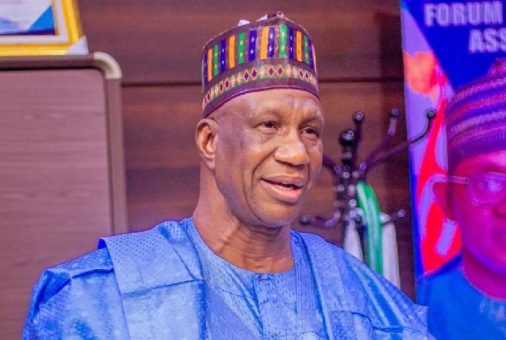
A CONSENSUS FOR CONTINUITY: The case for Baba Malam Wali in Yobe 2027
By Ajiya Mustapha
As Yobe State approaches the defining moment of the 2027 governorship election, the conversation across communities, political circles, and stakeholders is gradually shifting from mere political contestation to a deeper, more strategic reflection on the future of the state.
The central question is no longer just about who should lead, but rather who can sustain the gains of today while intelligently shaping the possibilities of tomorrow. It is within this context that the growing consensus around Alhaji Baba Malam Wali (mni) emerges not as a product of political convenience, but as a deliberate and thoughtful choice rooted in continuity, consolidation, and future development.
Yobe’s journey over the past decade has been one of resilience, post conflict recovery, and steady institutional rebuilding, anchored first by the stabilizing leadership of former Governor Ibrahim Gaidam, whose tenure laid the foundational pillars of governance, fiscal discipline, and post-conflict recovery, and subsequently strengthened under Governor Mai Mala Buni, who has deepened these gains through expanded infrastructure, institutional reforms, and inclusive development initiatives across the state.
Together, these administrations have created a continuum of progress that has repositioned Yobe on a path of sustainable growth. Yet, these achievements remain delicate and require not disruption, but careful consolidation. In such a moment, continuity becomes not a political slogan, but a strategic necessity, one that demands a leader who not only understands this shared legacy of progress but has been directly involved in translating it into policy, coordination, and measurable outcomes.
Baba Malam Wali represents this rare continuity. His long-standing service as Secretary to the State Government, spanning multiple administrations, places him at the very core of Yobe’s governance architecture. In this role, he has functioned as the silent coordinator of government, ensuring that policies are not only conceived but effectively implemented across ministries, departments, and agencies. His experience reflects a deep institutional memory, one that understands both the strengths and the limitations of the system and is therefore best positioned to guide its evolution.
What distinguishes Baba Malam Wali further is not just his experience, but the nature of his leadership. In a political environment often characterized by noise and spectacle, he has built a reputation as a quiet achiever; disciplined, methodical, and focused on results. His career trajectory, from the civil service to permanent secretary, and eventually to the highest administrative office in the state, speaks to a lifetime of service grounded in competence and professionalism. He is not a newcomer to governance; he is a product of it, shaped by years of navigating its complexities and delivering outcomes within its structures.
Equally important is the question of trust and loyalty in governance. Stability in leadership is often anchored on the ability of a successor to preserve the vision and ethos of an administration while bringing in fresh perspectives. Baba Malam Wali’s consistent service under successive governors demonstrates a level of reliability and commitment that is both rare and valuable. His relationship with Governor Buni is not merely political; it is institutional. It reflects a shared understanding of governance priorities and a mutual commitment to the progress of Yobe State. In this sense, his emergence as a preferred successor is less about succession politics and more about safeguarding a legacy.
Beyond continuity and loyalty, Baba Malam Wali also represents a unifying force in Yobe’s political landscape. His administrative style, marked by consultation and coordination, has positioned him as a bridge across different interests – political, bureaucratic, and community-based. At a time when political divisions can easily derail development, his ability to foster consensus becomes a critical asset. His candidacy signals stability, cohesion, and a focus on governance rather than conflict.
Read Also: NiMet forecasts 3-day sunshine, cloudiness across Nigeria
Looking ahead, the future of Yobe demands more than preservation; it requires intelligent expansion. The next phase of development will involve scaling ongoing projects, deepening economic opportunities, strengthening climate resilience, and expanding youth engagement. These are not tasks for experimentation. They require a leader who understands the foundation already laid and possesses the technical and administrative capacity to build upon it. Baba Malam Wali’s background in rural development, poverty eradication programmes, and sectoral leadership equips him with a comprehensive understanding of the state’s socio-economic dynamics.
Ultimately, the growing consensus around Baba Malam Wali reflects a collective recognition of what Yobe needs at this critical juncture. It is a recognition that progress is not always about change for its own sake, but about continuity with purpose. It is about choosing experience over uncertainty, stability over disruption, and strategic leadership over political excitement.
Looking ahead, the future of Yobe demands more than preservation; it requires intelligent expansion. The next phase of development will involve scaling ongoing projects, deepening economic opportunities, strengthening climate resilience, and expanding youth engagement. These are not tasks for experimentation. They require a leader who understands the foundation already laid and possesses the technical and administrative capacity to build upon it. Baba Malam Wali’s background in rural development, poverty eradication programmes, and sectoral leadership equips him with a comprehensive understanding of the state’s socio-economic dynamics.
Ultimately, the growing consensus around Baba Malam Wali reflects a collective recognition of what Yobe needs at this critical juncture. It is a recognition that progress is not always about change for its own sake, but about continuity with purpose. It is about choosing experience over uncertainty, stability over disruption, and strategic leadership over political excitement.
As 2027 approaches, the choice before the people of Yobe is clear. In Baba Malam Wali, they are not just choosing a candidate; they are choosing a pathway one that secures the gains of today while confidently advancing into the future.
Ajiya Mustapha writes from Potiskum
