
Stop justifying media restrictions on national security, group urges African govts

Stop justifying media restrictions on national security, group urges African govts
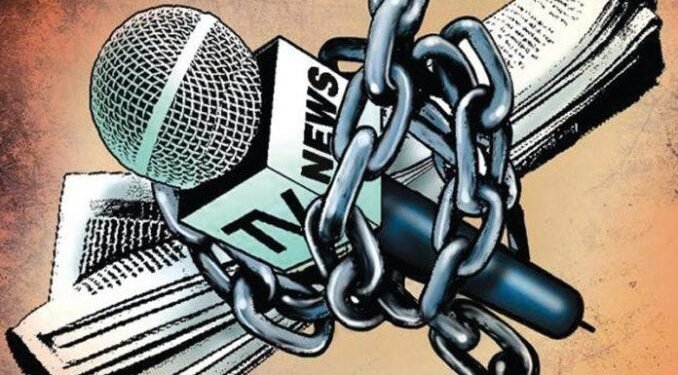
A group, Society for Journalism Enhancement Initiative, has urged African governments to stop justifying restrictions on the media in the name of national security.
The Convener of the group, Dr Gbemiga Bamidele, gave the advice on Saturday while speaking on the 2026 World Press Freedom Day.
The theme of the with the theme, “Shaping a Future of Peace: Promoting Press Freedom for Human Rights, Development and Security”.
According to Bamidele, a restricted press does not enhance security, it conceals insecurity.
“Across Africa, governments often justify restrictions on the media in the name of
national security.
“In Nigeria, this has manifested in crackdowns on journalists
covering protests or conflict.
“Attempts to regulate or restrict digital platforms, and framing critical reporting as a threat to state stability.
Read Also: Harde Business School expands skill-based education, targets 70%…
“However, this approach misunderstands the role of the media. A restricted press does not enhance security, it conceals insecurity,” he said.
He said that a free press, on the other hand, served as an early warning system, exposes governance failures that fuel instability, builds public trust through
transparency.
“Security built on secrecy is fragile; security built on truth is sustainable.”
Bamidele said reframing the narrative, Africa and indeed Nigeria must move beyond viewing press freedom as a Western construct and embrace it as a homegrown necessity.
“The theme for this year’s world press freedom day captures a profound truth: press freedom is not merely a media concern; it is a societal necessity.
“Nowhere is this more evident than in Africa, and particularly in Nigeria, where the media sits at the crossroads of governance, conflict, and development.
“Under the normative leadership of UNESCO, this theme challenges states and societies to rethink the role of journalism, not as a disruptive force, but as a stabilising pillar of democratic life.
“In many African contexts, peace is often narrowly defined as the absence of
conflict. However, sustainable peace requires justice, inclusion, and informed
public discourse, all of which depend on a free and responsible press.”
Bamidele said in Nigeria, recurring challenges such as communal clashes, insurgency, and political tensions highlighted the need for conflict-sensitive journalism.
According to him, the media has the power to de-escalate tensions through accurate reporting, counter misinformation and hate speech, as well as amplify voices of reconciliation and dialogue.
“This role is frequently undermined when journalists operate under fear of arrest, intimidation, or censorship.
“True peace, therefore, is not achieved by silencing the press, but by protecting it.
“Press freedom is inseparable from human rights. It gives life to the fundamental right to freedom of expression and ensures that citizens can hold power accountable.”
He said that across Africa, and in Nigeria specifically, journalists were historically exposed to electoral irregularities, corruption and misuse of public funds and human rights abuses by state and non-state actors.
He said that organisations such as the Media Rights Agenda (MRA) and the International Press Centre (IPC) continued to advocate for transparency and accountability, often using World Press Freedom Day as a platform for engagement.
Bamidele, however, said that persistent challenges included the use of cybercrime and security laws to detain journalists, limited access to public information and weak enforcement of legal protections.
“If citizens are denied access to information, then human rights become abstract promises rather than lived realities.
“Press Freedom as a driver of development is not only about infrastructure, it is about informed participation, accountability, and inclusive governance.
“A free press contributes to development by investigating corruption that diverts
public resources, highlighting gaps in education, health, and social services, and providing a platform for marginalised voices,” he said.
He said that in Nigeria, the media had played a crucial role in shaping public discourse around governance reforms, economic policies, and social justice.
