
Women groups decry declining female representation in 2027 party primaries

Women groups decry declining female representation in 2027 party primaries
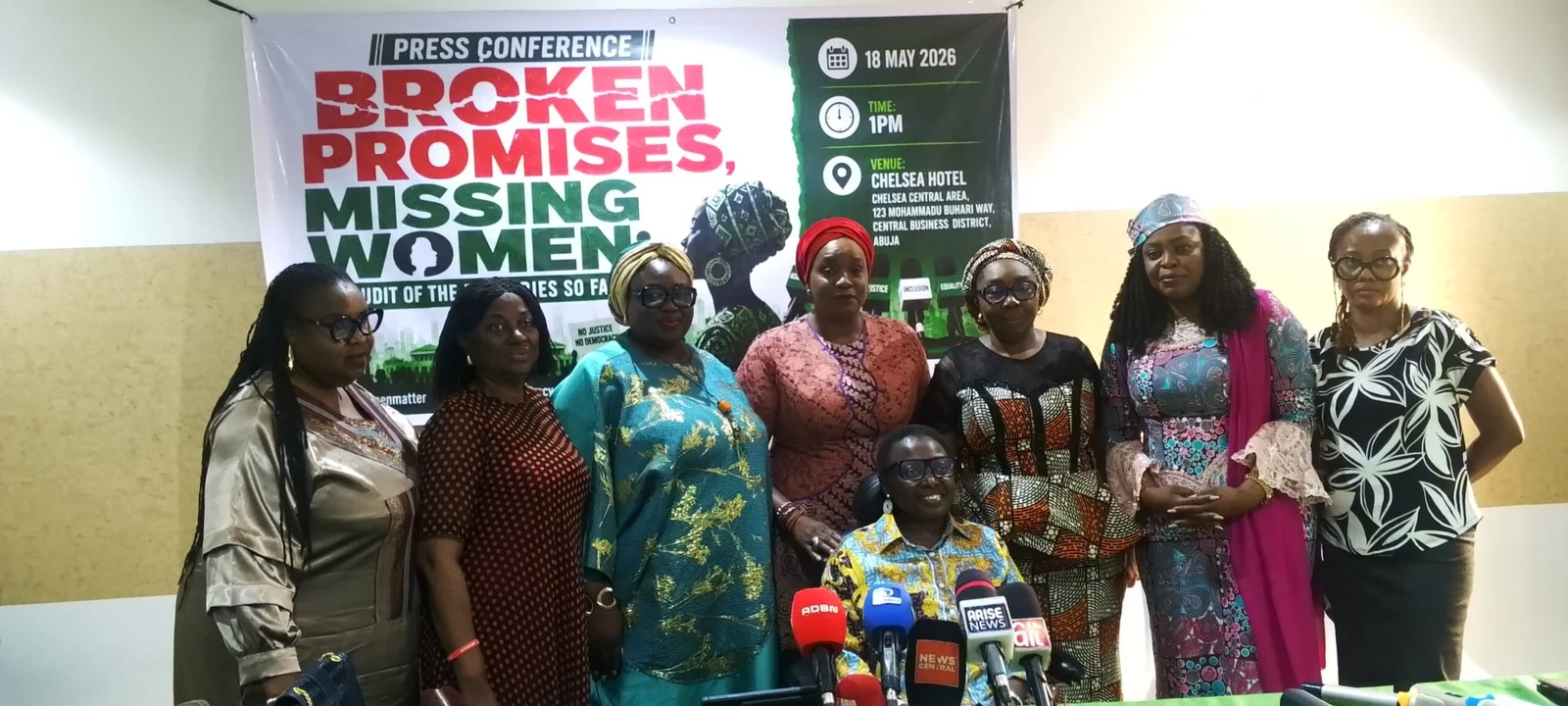
A coalition of women’s rights organisations has raised concerns over what it described as a troubling decline in female representation in ongoing political party primaries ahead of the 2027 general elections.Speaking at a news conference themed, “Broken Promises, Missing Women” on Monday in Abuja, the coalition warned that recent primary outcomes reflected a widening gap between gender inclusion commitments and political realities.
Toun Okewale of the Voices of Women Empowerment Foundation, said decisions taken by political party leaders in the coming weeks would determine whether the 2027 elections marked progress or a repeat of past exclusionary trends.
She recalled President Bola Tinubu’s 2026 International Women’s Day pledge on stronger inclusion of women in governance, as well as commitments by the Nigeria Governors’ Forum to mainstream women’s empowerment programmes across states and local governments.
“Those commitments raised national expectations that this election cycle would be different.
“However, the primaries conducted so far have revealed a troubling gap between those promises and political reality,” she said.
According to her, early results from the All Progressives Congress (APC) House of Representatives primaries show a significant drop in female representation.
She attributed the trend to systemic challenges, including disqualifications, internal party pressures and forced withdrawals that weakened women’s chances of securing party tickets.
Also speaking, President of the Women in Politics Forum, Mrs Ebere Ifendu, said while women participated actively in the primaries, many were edged out at critical stages due to internal party arrangements and consensus decisions.
Read Also: Wike orders probe into Abuja building collapse
Ifendu urged political parties yet to conduct their primaries, including the Labour Party, African Democratic Congress (ADC), Social Democratic Party (SDP) and Action Alliance (AA), to ensure greater inclusion of women.
She said the remaining primaries, scheduled between May 19 and 29, presented a “critical window” for parties to demonstrate commitment to inclusion.
“There is still a clear and practical path forward. First, women should be actively considered for consensus arrangements where possible.
“Second, where no consensus emerges, the political will of parties must back qualified women to the finish line,” she said.
President of the League of Women Voters of Nigeria, Irene Awunah-Ikyegh, said women’s inclusion in politics would strengthen voter engagement and improve governance outcomes in key sectors such as education, healthcare and grassroots development.
She emphasised that inclusion should be measured by the number of women who eventually appear on ballot papers, rather than public statements.
“We are not here to attack parties. We are here to hold all political parties to the standards they publicly set for themselves,” she said.
She urged party leaders to demonstrate “genuine political will” by supporting qualified women through internal party structures.
Other speakers, including Mrs Lois Auta of the Network of Women with Disabilities, decried the exclusion of women with disabilities from party primaries.
Emmanuela Azu of the Women Advocates Research and Documentation Center called on the media to give greater visibility to female political aspirants.
