
Support constitutional reforms on grassroots policing – FG urges South-East stakeholders

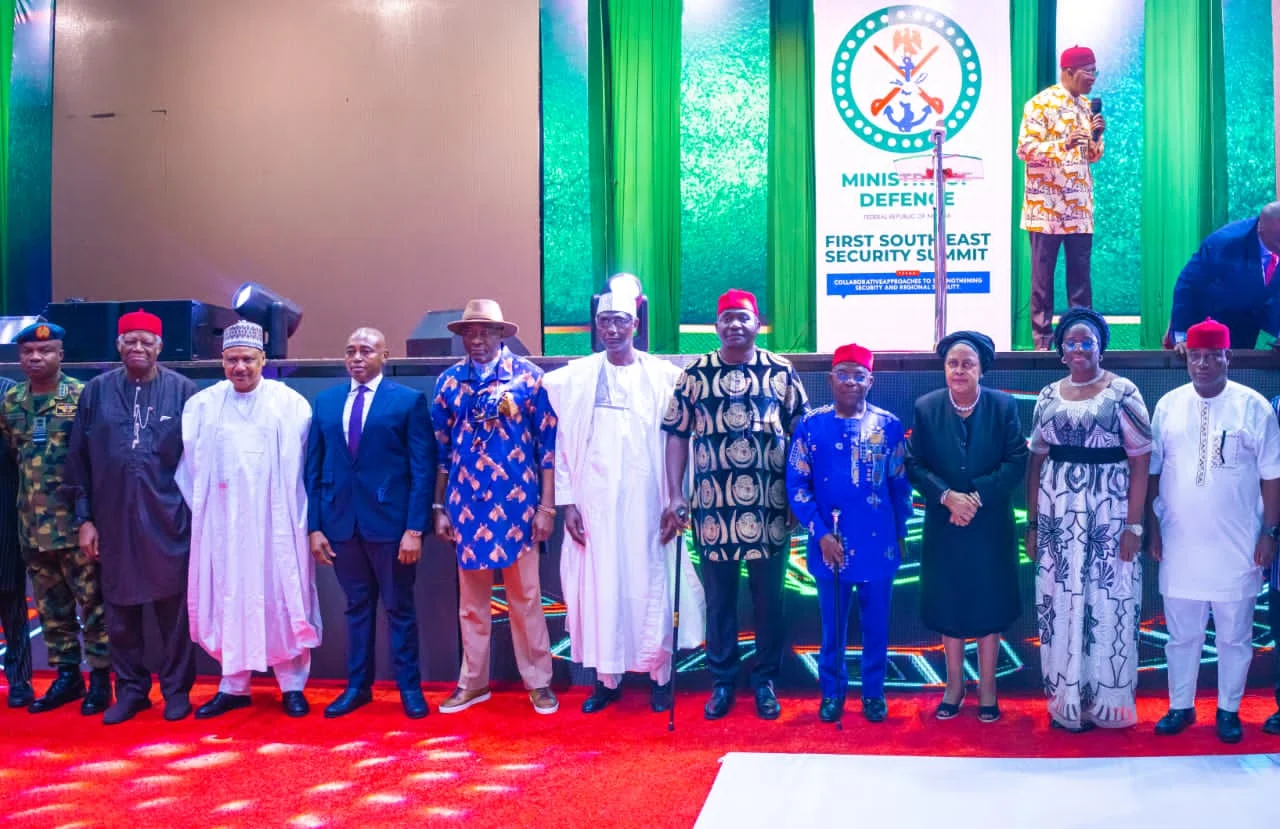
Support constitutional reforms on grassroots policing – FG urges South-East stakeholders
The Minister of Information and National Orientation, Mohammed Idris, has urged security stakeholders to reject misinformation and support efforts to strengthen grassroots policing through ongoing constitutional reforms on state police.
The minister gave the advice on Thursday at the maiden South-East Regional Security Summit, themed “Collaborative Approaches to Strengthening Security and Regional Stability” in Umuahia, Abia.
He also renewed government’s commitment to stronger cooperation among governments, security agencies, traditional institutions, faith communities, civil society and citizens.
“Let us support constitutional reforms that strengthen grassroots policing. Let us reject misinformation, resist the voices of division and work together to build communities founded on trust, justice and shared prosperity.
“Under the leadership of President Bola Tinubu, the Federal Government will continue to partner with the people of the South-East to ensure that this region remains a place where businesses flourish, communities thrive and every child can dream without fear.
“When the South-East is secured, Nigeria is stronger. When every region enjoys peace, our democracy flourishes.
“And when we stand together as one people, united by a common destiny, no force can diminish the promise of the Federal Republic of Nigeria,” the minister said.
According to him, it is the desire of President Bola Tinubu to bring security and policing closer to the communities around this country, and that is why all of us must rise up and support the issue of state police in this country.
The minister urged the five governors in the South-East region, state legislatures, traditional institutions, religious leaders,
and other relevant stakeholders to engage constructively in the ongoing constitutional process on the creation of state police at the National Assembly.
“This is therefore a defining moment for broad national engagement. I therefore encourage Governors, State Legislatures, traditional institutions, religious leaders, civil society, professional bodies and the media to engage constructively in this important constitutional process.
“Whatever our perspectives, we share a common goal of building a policing system that is more responsive, accountable and effective while preserving the unity and constitutional integrity of our nation.
“Peace is far more than the absence of conflict; it is the presence of justice, of opportunity, of inclusion, and of hope.
“The South-East has always been defined by enterprise, resilience, industry and ingenuity. Those enduring values must remain stronger than the forces that seek to undermine them.”
The minister said the summit’s theme required a whole-of-government and whole-of-society approach.
Read Also: Oborevwori’s wife intensifies campaign against autism stigma in…
According to him, this involves governments, security agencies, traditional rulers, religious leaders, civil society and citizens.
He reiterated the commitment of President Bola Tinubu’s administration to protecting lives and property through improved intelligence sharing, stronger inter-agency coordination, better equipment for security agencies and international partnerships.
“The federal government remains fully committed to ensuring that every community across the South-East enjoys lasting peace and security. Security is the foundation for investment, education, agriculture and economic prosperity,” he said.
The minister also highlighted ongoing investments in infrastructure, youth empowerment, education, digital skills and support for small businesses, describing them as critical components of the administration’s security strategy.
In his remarks, President of the Senate, Sen. Godswill Akpabio, said the National Assembly remained committed to providing the legislative support required to strengthen Nigeria’s security architecture and promote lasting peace across the country.
Akpabio, represented by the Chairman of the Senate Committee on Army, Abdulaziz Yar’Adua, emphasised that addressing insecurity required strong partnerships among government, security agencies, traditional institutions, civil society and citizens.
“No nation has ever secured itself through isolated efforts; security succeeds where partnerships flourish,” he said.
The Senate President added that the Senate would continue to support initiatives that enhance national unity, economic development and regional stability.
The Deputy Speaker of the House of Representatives, Rep. Benjamin Kalu, called for stronger regional cooperation and institutional reforms to address evolving security challenges in the South-East.
“The time has come to move from dialogue to implementation. Security cannot be achieved through force alone; it requires collaboration, community trust and collective responsibility,” Kalu said.
He reaffirmed the commitment of the House of Representatives to supporting legislative and constitutional reforms that would strengthen Nigeria’s security architecture.
In his remarks, Gov. Alex Otti of Abia, described security as the bedrock of development and prosperity, saying that no meaningful progress could be achieved in an atmosphere of fear and insecurity.
“We cannot afford to surrender this great land and its people to the forces of insecurity. Security is the foundation upon which all our hopes for development and prosperity rest,” the governor said.
He also emphasised the need to create economic opportunities for young people, strengthen intelligence sharing and tackle the root causes of crime to consolidate peace and promote regional development.
The Minister of Defence, Gen. Christopher Musa (Rtd), said the federal government remained resolute in its commitment to safeguarding the lives and property of all Nigerians through sustained investments in the Armed Forces and other security agencies.
“Security is not solely the responsibility of the Armed Forces or the Police; it is a shared responsibility that requires the collective commitment of government, communities and every patriotic citizen,” he said.
Musa added that enhanced training, modern equipment, improved intelligence gathering and stronger inter-agency collaboration were strengthening the nation’s security response.
