
Sasakawa Foundation supports Benue farmers with N13m power tiller to boost productivity

Sasakawa Foundation supports Benue farmers with N13m power tiller to boost productivity
The Sasakawa Africa Association (SAA) has empowered farmers in Benue with a 18-horsepower power tiller valued N13 million to reduce production costs, ease farm labour and improve agricultural productivity.
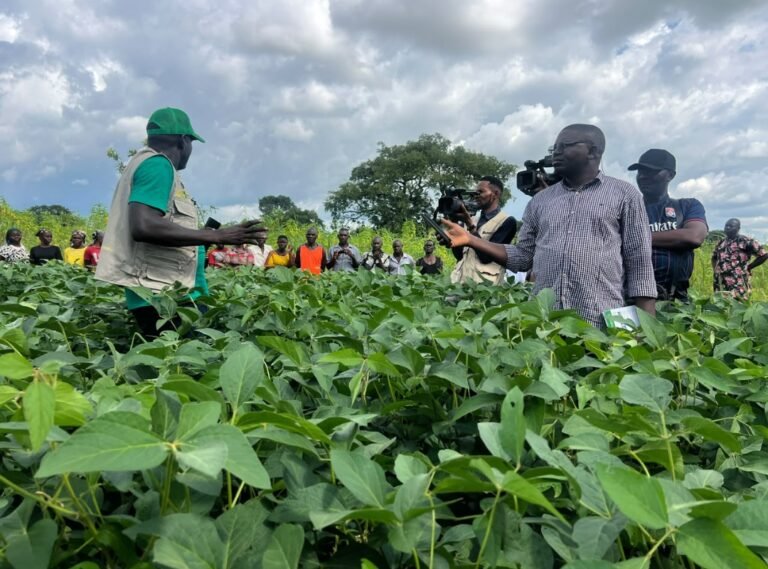
Dr Moshood Sulaiman, Programme Officer, Safe, Adequate and Nutritious Food System, SAA, disclosed this during a media field visit to some of the organisation’s intervention sites in Buruku Local Government Area.
The Voice Media Trust (VMT NEWS) reports that The Nippon Foundation funds the project through SAA, in partnership with Benue State Bureau of Agricultural Development and Mechanisation.
Sulaiman said the power tiller could work 20 to 40 times faster than manual labour, adding that it could cultivate one hectare within two to three hours, compared with seven to 10 days required for manual cultivation.
He said that mechanisation could contribute about 20 per cent to increased farm productivity, particularly for farmers cultivating large areas of land.
According to him, the intervention is designed to reduce drudgery, lower production costs and improve efficiency.
He also said that SAA had trained operators in machine operation, repairs, maintenance and troubleshooting to ensure the sustainability of the equipment.
Mrs Blessing Chichi, President, Divine Open Doors Women Multi-Purpose Cooperative Society, said the power tiller had significantly reduced the cost of land preparation for members.
Chichi said manual cultivation cost about N60,000 per hectare, while mechanised cultivation using the power tiller cost between N30,000 and N35,000, including labour, diesel and other services.
She said that the cooperative initially cultivated about 100 hectares of cassava with SAA’s support, but about 18 hectares was subsequently destroyed and harvested by unknown persons, causing severe losses and discouraging members from collective farming.
According to her, SAA later provided about N807,000 to help the women restart cultivation, while the power tiller further enabled them to return to farming.
Chichi said the cooperative had since recovered and cultivated about 58 hectares of mainly cassava and soybeans.
She said that SAA also trained members in weed control, farm management, record keeping, savings and prudent financial management.
Read Also: First Lady inaugurates ICT centre at Kwara varsity, targets…
Also, Moses Nongoatse, Communication Officer, SAA Nigeria, said the organisation’s intervention went beyond the provision of farm inputs to include capacity building, technology adoption, collective action and market access.
Nongoatse said that SAA provided the farmers with improved seeds, herbicides and other inputs, while farmers contributed land for demonstration plots used for practical learning.
He said that the objective was to enable farmers adopt improved farming practices and apply the knowledge on their own farms to increase productivity and income.
Nongoatse said successful adoption by farmer groups had attracted additional support, including a mini tractor provided in partnership with Kubota, because of the scale of agricultural activities in the communities.
He said that SAA particularly targeted smallholder farmers with low incomes, low productivity and those living in hard-to-reach communities.
Jonathan Yassah, Programme Officer, Inclusive Markets and Agribusiness Development, SAA, said the organisation established a soybean seed multiplication plot at Mpatsase, one of the remotest communities in Benue.
Yassah said that the TGX 1951-3F soybean variety was disease- and pest-tolerant and had a potential yield of at least 2.5 tonnes per hectare under good management.
He said that SAA was encouraging farmers to treat agriculture as a business through improved access to quality seeds, stronger farmer organisations and market linkages.
Msugh Ahula, a beneficiary from Mbatsaase Community in Buruku, commended SAA for providing improved seedlings, saying the varieties were different from those traditionally used by farmers.
He appealed to the organisation to sustain its support to enable beneficiaries consolidate the gains recorded.
Comfort Anu, SAA State Coordinator in Benue, said the organisation operated in eight LGAs—Vandeikya, Ushongo, Gboko, Konshisha, Buruku, Tarka, Gwer East and Guma.
Anu said SAA had 15 extension agents supporting farmer groups and had provided free fertilisers, herbicides, insecticides and other agricultural inputs.
She said the organisation also established demonstration plots to promote adoption of improved practices, with interventions focused on soil health, human health and nutrition.
