
BioRTC leads innovation against emerging diseases in Yobe

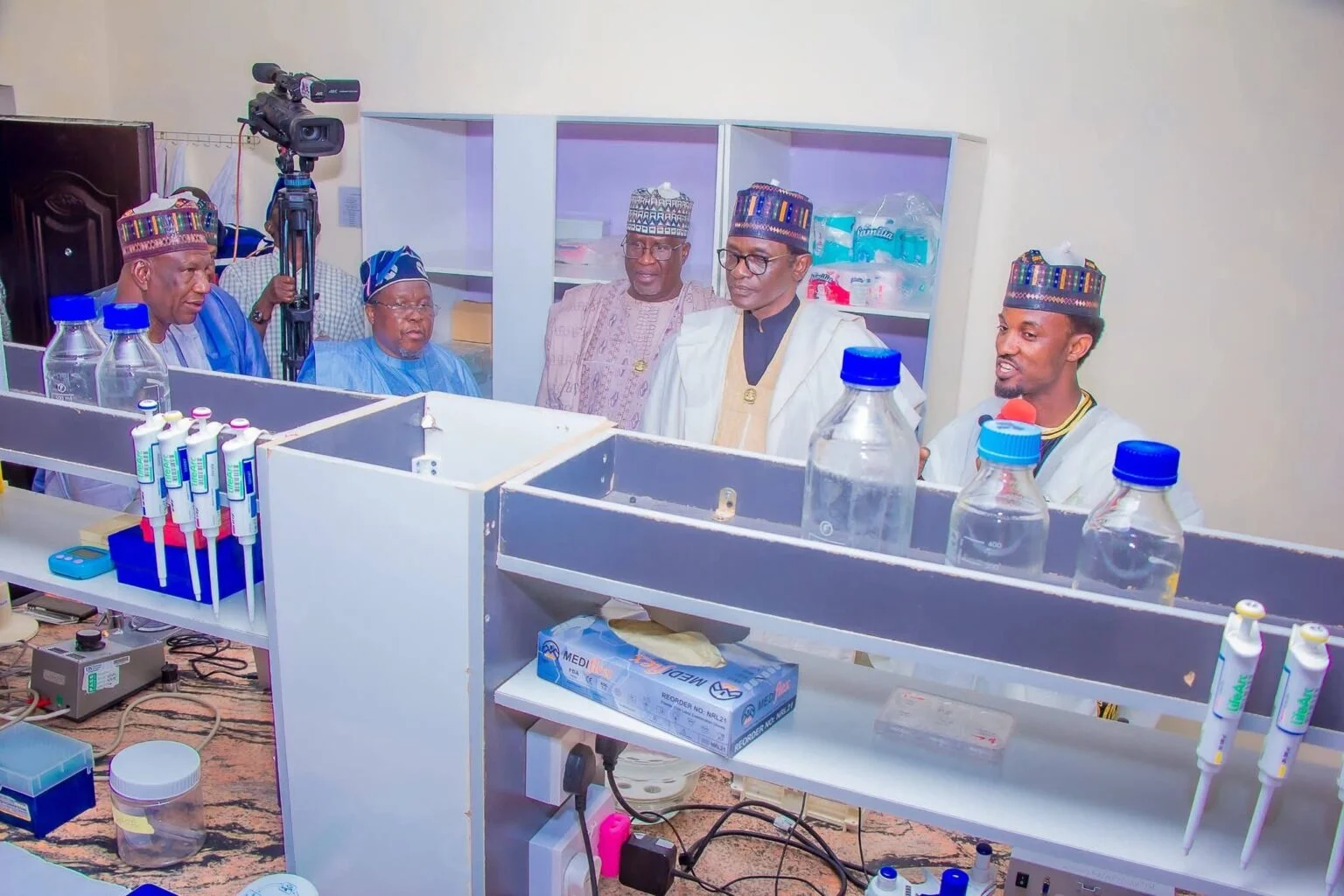
BioRTC leads innovation against emerging diseases in Yobe
By Nabilu Balarabe, News Agency of Nigeria (NAN)
For decades, communities along the River Yobe have silently battled a deadly health crisis.
Chronic Kidney Disease (CKD) has claimed countless lives, leaving families in fear and uncertainty.
Now, a pioneering research initiative led by the Biological Science Research and Training Centre (BioRTC) at Yobe State University, Damaturu, is beginning to shed light on the causes of this decades‑old scourge.
Founded in 2021 by Prof. Mahmoud Maina, a renowned neuroscientist, BioRTC was established to serve as an innovative hub for understanding local health challenges and addressing them in a globally competitive way.
It may be recalled that all major civilisations, including the Greek, Roman and British empires, were propelled by research and innovation.
Through systematic inquiry, they studied their environments, identified challenges and developed solutions that improved living conditions and strengthened their societies.
Unfortunately, Africa has been left far behind in modern scientific research and advancement.
Many medical studies conducted in different climes, environments and cultural contexts are often applied to African populations without sufficient consideration for the continent’s unique realities, including its environmental conditions and genetic diversity.
Consequently, BioRTC is well equipped to conduct research in cancer, malaria, CKD, dementia, among other diseases.
Recently, the centre collaborated with about 50 scientists from the UK, US, and Ghana to investigate the persistent burden of renal failure in parts of Yobe.
Nationally, CKD is also recognised as a major health concern, with community‑based studies estimating prevalence rates ranging from about 10 per cent to nearly 19 per cent among adults across different regions of Nigeria.
Awareness of CKD and its risk factors; such as hypertension, diabetes, and obesity remains low, contributing to late diagnosis and advanced disease stages at presentation.
Moreover, up to 25 million Nigerians may be living with some form of kidney disease, according to nephrology experts, with approximately 230,000 patients in need of life‑saving treatments like dialysis or transplant.
However, access to care is limited, only about 354 functional dialysis machines are spread across public and private facilities nationwide, and many patients cannot afford regular treatment even with recent subsidies.
To understand the local situation, experts; including nephrologists, geologists, chemists, physicians, geneticists, and environmental scientists, collected 3,000 human and environmental samples of urine, blood, food items, farm soil, river, and borehole water for research in Gashua and Damaturu.
Preliminary results indicated heavy metal presence in water consumed by residents of Gashua town.
Available records show that metals like cadmium, lead, and arsenic are known triggers of CKD and should normally be absent from the environment.
“The findings further revealed that CKD is significantly driven by known conditions like diabetes and hypertension and that fishermen in the area are mostly affected by the disease as against others,” the study noted.
At the recent inauguration of the centre’s permanent site in Damaturu, stakeholders re‑emphasised the need for mainstreaming science and innovation for nation‑building.
Gov. Mai Mala Buni, who spoke at the event, revealed that his administration spent N800 million constructing the permanent site of BioRTC.
He also praised Prof. Maina for acquiring equipment worth over N10 billion for the centre’s operations.
“This is a scientific asset that will enable research that is more inclusive, more accurate, and more relevant to our people.
“I am proud that BioRTC has established Africa’s first major induced pluripotent stem cell (iPSC) biobank with an African‑centred focus.
“This work will place our country on the global map in Alzheimer’s disease and brain health research, and ensure African populations are not excluded from the future of neuroscience,” Buni said.
Furthermore, the governor expressed optimism that BioRTC would unravel the cause of decades‑old CKD at the shores of the Yobe River, which has claimed many lives.
“This has been a major driving force to the establishment of the centre to find a solution to this scourge,” he said.
He further called on the Federal Ministry of Health to partner with BioRTC in providing low‑cost diagnostic tools to detect malaria and other tropical diseases; an appeal that reflects broader national calls for subsidised kidney care and strengthened primary care services.
Similarly, the Vice‑Chancellor of Yobe State University, Prof. Mohammed Tahir, described BioRTC as “one of the most visible and globally connected research initiatives associated with Yobe State University.
“Its growth affirms that when vision is matched with leadership, partnership, and sustained commitment, excellence is achievable anywhere”.
He assured that the university would deepen constructive collaboration with BioRTC for the benefit of students, researchers, and the wider society.
Meanwhile, Prof. Maina, also a visiting professor at the University of Sussex, UK, recounted how his experience with research in the UK inspired him to replicate similar initiatives at home.
“People in UK are well informed and even donate their money for the conduct of research. That inspired me to say why don’t we do that back at home?” he said.
In addition, BioRTC, which previously operated from a temporary site, has recently launched dementia research.
Maina explained that although dementia is associated with aging, it is not a normal part of aging.
He said through the Induced Pluripotent Stem Cells (iPSCs) technology, tissue samples could be used to analyse dementia, especially in the absence of brain donors.
“Using iPSCs technology, tissue samples can be converted into stem cells and then further transformed into brain cells.
“Then we can now grow the brain cells using those ones, and these brain cells will have similar biology and property as the individual that gave us the donation of the skin biopsy.
Read Also: Marwa Urges Youth to Embrace Skills Acquisition, Empowerment…
“This means that if a person is at risk of dementia, we can test in his cells how to understand the risk and to prevent it as if it is happening in him, but without him giving us his brain,” he said.
Moreover, Maina emphasised that iPSCs technology is crucial for developing drugs to treat dementia and other conditions.
“The financial burden of dementia, globally, is also over three trillion dollars. It will be more crippling to Africa than the West.
“This is why some people say dementia is worse than cancer because you can still remember and pray even on your sick bed.
“You can say your prayer before you die. But for dementia, you can stop being in this world decades before you are gone,” he said.
Beyond CKD and dementia, the centre has also developed innovative open‑science, battery‑powered microscopes for field‑based malaria diagnosis and established the BioRTC–University of Maiduguri MSc and PhD Neuroscience Programmes.
It is the first in Nigeria and the second in Africa, to train world‑class neuroscientists locally.
Additionally, Prof. Amadi Ihunwo, Secretary General of the Society of Neuroscientists of Africa (SONA), called on public and private sectors to invest in BioRTC and advised the Federal Government to establish similar centres in each of the six geopolitical zones.
“The centre is equipped with facilities for advanced cellular, molecular and neuroscience research that are rarely found in many African universities,” Ihunwo said.
In conclusion, stakeholders stressed the need for sustained funding for research and structured support for talented scientists to drive innovation and attract investment.
They said the establishment of BioRTC strengthens Nigeria’s capacity to address kidney disease and other health challenges linked to tropical and emerging diseases.
According to them, continued investment, policy support and community engagement are essential to translating research into improved public health outcomes, especially for communities along the River Yobe. (NANFeatures)
