
Yobe, Adamawa tighten security to curb illegal mining

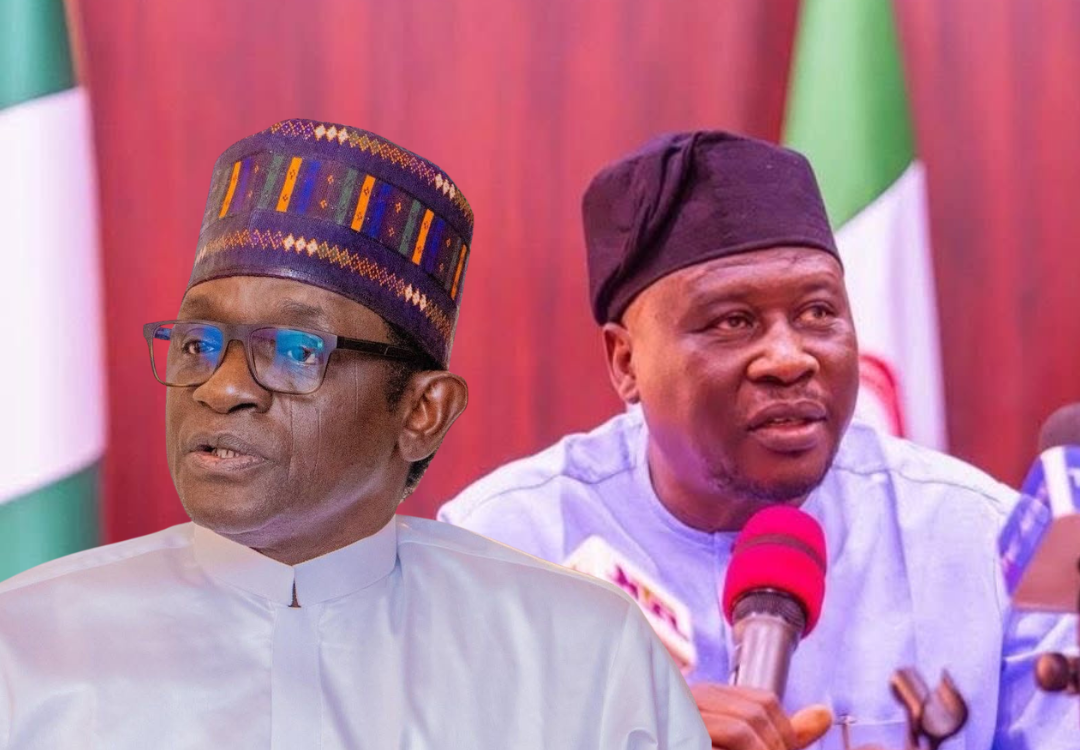
Yobe, Adamawa tighten security to curb illegal mining
Yobe and Adamawa have stepped up security measures to checkmate the rise in violent crimes associated with illegal mining in some of their rural communities.
These measures may not be unconnected with the allegations that the quest for solid minerals such as gold was responsible for banditry and insurgency in some parts of the country.
An investigation carried out by the News Agency of Nigeria (NAN) revealed that there are more than 27 solid minerals across different parts of Yobe, including gold, limestone, gypsum, trona, diatomite, granite and kaolin.
While Adamawa is currently housing more than 26 solid minerals in commercial deposits such as gold, limestone, gypsum, trona, diatomite, granite and kaolin.
Gov. Mai Mala’s Special Adviser on Security Matters, retired Brig.-Gen. Dahiru Abdulsalam told NAN that the state had deployed marshals in Gulani and Gujba local government areas to tackle illegal mining.
He said the newly recruited mining marshals were drawn from the police, Nigeria Security and Civil Defence, Department of State Security Service ( DSS) and deployed to the areas under a pilot project.
“As time goes on, the state government is going to establish a full-fledged mining marshals backed up by the law as a security outfit of the state government.
“This will allow us to recruit more personnel, train and equip them to protect the mining areas, miners and the assets of their companies,” Abdulsalam said.
He stated that illegal mining breeds insecurity, immorality, illiteracy and ecological problems.
Alhaji Aji Bularafa, state Commissioner for Wealth Creation, Empowerment and Employment Generation, expressed concern over the influx of unregistered miners to the areas.
The commissioner insisted that if the trend was not checked, bandits and terrorists could hijack mining activities and plunge the areas into serious security challenges.
Bularafa, a critical stakeholder in the areas, advised stakeholders to cooperate with the government by ensuring that they registered their companies with the state Mining Development Corporation.
Mohammed Bara, Commissioner for Energy and Transport, said registration offices would soon be open in Shishiwaji and Damaturu, advising residents to only trade with registered miners.
He also cautioned village heads against indiscriminate selling of farmlands to unregistered miners, saying such acts could only lead to clashes in the areas.
Bara appealed to the stakeholders to exercise patience, saying the new mining reforms were aimed at sanitising the sector for enhanced security and revenue generation.
However, Gov. Ahmadu Fintiri of Adamawa has banned illegal mining activities to curb banditry and communal conflicts linked to mineral resources.
Mr Mathew Ayuba, Director of Geology, Adamawa Ministry of Mineral Resources Development, said that the ban was a proactive measure to curb banditry and communal conflicts.
Read Also: TETFund expands 2026 National research fair to drive…
He cited recent disputes in some communities, including Chobo and Lamurde areas, as the cause of the government’s decision to strengthen regulation of the sector.
Ayuba said the government had also curtailed the activities of illegal scavengers, who often explored mineral-rich areas without authorisation.
He added that the governor had inaugurated the Mineral and Environmental Management Committee (MEMCO) to oversee mining activities and environmental compliance.
According to him, Adamawa is endowed with various solid minerals, including monazite, copper, fluorite, lithium, gold and sapphire.
He said mineral deposits were found in large quantities across the state’s 21 local government areas, particularly in Song, Mubi, Maiha, Jada, Toungo and Michika.
Ayuba added that mining activities in parts of Madagali had remained suspended because of security concerns arising from insurgency.
He attributed the state’s rich mineral deposits to its location along the Cameroon Volcanic Line, which contributed to its geological significance.
He said the state Ministry of Solid Minerals Development was collaborating with the Nigeria Mining Cadastre Office to access mining records and verify locations before granting clearance to prospective operators.
According to him, while the Federal Government issues mining licences, the state government would grant clearance and facilitate community consent for applicants.
“The state does not issue mining licences. What we provide is clearance after verifying that the proposed site is free from disputes or conflicting claims.
“Applicants are also directed to relevant traditional institutions to obtain consent letters before proceeding with licence applications to the Federal Government,” he said.
Ayuba said the process was designed to ensure peaceful coexistence between mining operators and host communities.
He disclosed that the state had commercial-scale mining activities and investors operating mineral processing plants.
