
Oyo, Ogun, Kwara Governments reaffirm commitment to flood prevention through sustained desilting

Oyo, Ogun, Kwara Governments reaffirm commitment to flood prevention through sustained desilting
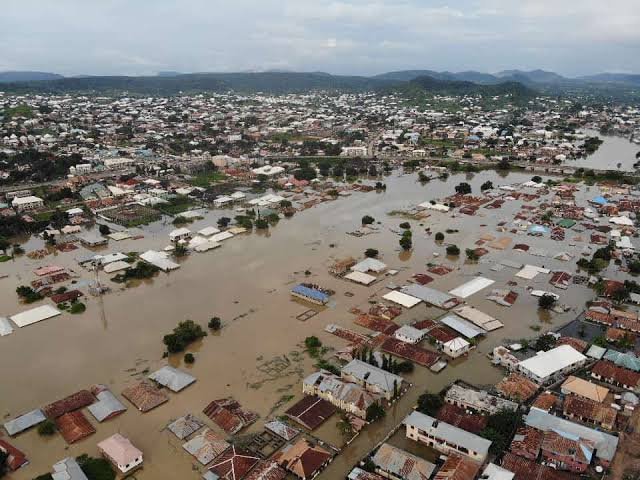
The Oyo, Ogun and Kwara Governments have adopted proactive measures, including drainage clearance, public sensitisation and dredging of waterways, to mitigate flooding during the rainy season.
The three states said this in their separate reactions to a survey on flood mitigation, conducted by the News Agency of Nigeria (NAN).
The states said they have put all mechanisms in place to mitigate flooding through improved preparedness, evacuation plans, and public sensitisation campaigns.
They said the measures were part of the proactive response to the annual flood predictions and their commitment to safeguarding lives, property and critical infrastructure.
The Nigerian Meteorological Agency (NiMet), Nigeria Hydrological Services Agency (NIHSA), and the Federal Ministry of Environment, had listed the three states among those at risk of flooding.
The Commissioner for Environment and Natural Resources in Oyo State, Mr Ademola Aderinto, reaffirmed government’s commitment to preventing flooding across the state through sustained desilting of waterways.
He said other preventive measures put in place include public sensitisation, and the implementation of strategic erosion control projects.
Aderinto noted that the seasonal climate prediction and the forecast by (NiMet) indicated that the state was expected to experience rainfall over a significant part of the year, though the level of rainfall was projected to be slightly lower than that of 2025.
He explained that according to the prediction and forecast, in spite of the lower cumulative rainfall, the state may still witness flash floods due to heavy rainfall occurring within short periods, a consequence of climate change and global warming.
The commissioner assured that the administration of Gov. Seyi Makinde remained proactive in addressing flood-related challenges, stressing that the government had put adequate measures in place to ensure that residents were protected from the devastating effects of flooding.
He disclosed that the ministry had commenced the first phase of desilting rivers and drainage channels across the state, including waterways under the Ibadan Urban Flood Management Project (IUFMP).
He added that the second phase was currently ongoing across critical river channels and flood-prone locations.
According to him, more than 50 per cent of the identified waterways have already been desilted, while additional phases of the exercise will be carried out to ensure the free flow of water and reduce the risk of flooding throughout the rainy season.
He explained that the continuous desilting exercise was designed to provide smooth passage for stormwater, thereby preventing blockages that often resulted in flooding.
He also disclosed that the state was set to commence additional erosion control and culvert construction projects under its watershed management programme across the three senatorial districts.
”The intervention will further strengthen the state’s flood control infrastructure and protect vulnerable communities,” he said.
He reaffirmed the commitment of the state government to sustaining environmental protection initiatives, while assuring residents that the ministry would continue to implement proactive measures aimed at mitigating the impact of climate change and ensuring a safer and healthier environment for all.
Speaking in the same vein, Mr Jonathan Adekunle, a Deputy Director at the state Ministry of Environment and Natural Resources, said that the ministry began issuing public advisories at the start of the season to prepare communities for high-intensity rainfall.
Adekunle noted that the soil across the state remained relatively firm, adding that this was limiting water infiltration and causing heavy surface runoff on roads, drainage, and in some communities.
Read Also: Army dismisses fake short service recruitment advertisement
“Flooding is expected to be temporary so residents should not panic, though it can become prolonged and destructive if waterways and drainage channels already cleared by government are obstructed or tampered with,” he said
The deputy director cautioned against activities that disrupt natural water flow, especially indiscriminate waste disposal, describing dumping on road medians and into drains as a major act of non-compliance that contributed directly to flooding.
In Ogun, the State Government through its Commissioner for Environment, Mr Ola Oresanya, said that the state had identified vulnerable communities after studying its flooding pattern.
Oresanya explained that the state experienced two major types of flooding, flash flooding caused by heavy rainfall and coastal flooding resulting from high tides and overflowing rivers during September and October.
He said that government had intensified drainage desilting and public awareness campaigns, urging residents to remain indoors during heavy rainfall until floodwaters recede within one or two hours.
The commissioner also advised residents in flood-prone coastal communities to elevate their buildings or temporarily relocate to safer areas, noting that government camps were only emergency options.
“We ensure that our drainage channels are clean and clear, so that nothing will disturb the flow of water because the flood will come naturally because of excessive rainfall and extreme weather conditions.
“This was predicted earlier in the year. So we know quite well that there will be excess water, which must be able to regress within one or two hours.
”We gave information to residents that during these particular days, especially in the month of June and July, people should stay indoors and monitor the flood conditions.
“And after the rain, within one or two hours the water would have disappeared, so information dissemination was one of our level of preparedness,” Oresanya said.
He added that the state also dredged new outlets around Isheri and the Oparo River to improve water discharge.
According to him, the intervention has significantly reduced flooding in the affected communities.
On evacuation, the commissioner noted that residents in coastal flood-prone communities would be evacuated to temporary resettlement camps if they ignore early warnings on impending flooding.
He said that rising tidal levels would be expected from Aug. 26, with severe coastal flooding likely between Sept. 18 and Oct. 16, urging vulnerable residents to relocate early.
He warned that flood could be experienced in homes during the period, particularly in coastal communities, stressing that early relocation remained the safest options.
He assured that emergency teams would evacuate residents, who failed to relocate voluntarily and accommodate them in resettlement camps for two to three weeks until floodwaters recede.
Similarly, the Kwara Government has urged residents in the state to support the ongoing efforts to prevent flooding and protect lives and property as forecasts indicated the likelihood of heavy rainfall in some parts of the state.
The state Commissioner for Environment, Hajia Nafisat-Musa Buge, said the state government had intensified preventive measures, including desilting drainage channels and strengthening collaboration with the state Emergency Management Agency (KWASEMA) and Climate/Ecology Units across the 16 Local Government Areas.
Buge said that the state government could only succeed with the cooperation of residents, urging them to desist from indiscriminate dumping of refuse in drainage channels.
The commissioner advised residents of flood-prone communities, particularly Jebba, Bode-Saadu, Kosubosu, Kaiama, Lafiagi and Patigi, to relocate to safer locations and remain vigilant throughout the rainy season.
She also appealed to traditional rulers and community leaders to sensitise their subjects in local languages on flood safety measures to ensure wider awareness and compliance.
”Protecting lives and property is a shared responsibility. We therefore call on all residents to support government interventions and take necessary precautions to reduce the impact of flooding,” the commissioner said.
A Soil Scientist, Dr Kayode Adeniran, said that government intervention had focused mainly on dam dredging and erosion control, while neglecting wider ecological challenges.
He warned that indiscriminate use of herbicides, deforestation and poor waste disposal were degrading the environment, polluting groundwater and threatening beneficial organisms.
Adeniran said that effective flood management required sound planning and engineering, adding that the study of historical flood patterns, improved drainage and sewer infrastructure, reduced impermeable surfaces in urban areas and the conversion of flood-prone areas into parks and other recreational spaces to minimise flood risks.
He called for strict anti-deforestation policies, compulsory tree planting, improved waste recycling and increased funding for the conservation of endangered species.
The National Orientation Agency (NOA), Kwara Directorate, said it has intensified public enlightenment campaigns aimed at mitigating the impact of flooding across the state.
Mr Kehinde Kayode, the Deputy Director, Environment, Climate and Energy Department said that it had also put in place contingency plans to evacuate residents in flood prone areas in case of emergencies.
Kayode also added that the agency was collaborating with traditional rulers, religious and community leaders, market women, youth groups, and other stakeholders to amplify flood awareness messages at the grassroot levels.
“We also utilise the Agency’s community information networks, local radio media platforms, and social mobilisation channels to disseminate timely information on flood risks, safety precautions, and emergency preparedness,” he said.
