
ECOWAS urges stronger protection for children vulnerable to trafficking

ECOWAS urges stronger protection for children vulnerable to trafficking
The Economic Community of West African States (ECOWAS) has urged member states to establish specialised protection services for children vulnerable to trafficking, abuse and exploitation.
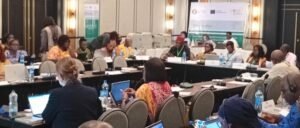
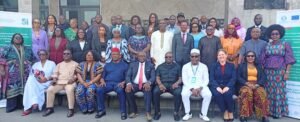
The call is contained in a communique issued at the 18th Annual Review Meeting of the ECOWAS Regional Network of National Focal Institutions against Trafficking in Persons Plus (RNNI-TIP+).
The five-day meeting ended on Friday in Lagos, with representatives of 12 ECOWAS member states and international partner organisations participating.
The communique recommended stronger national child protection systems, dedicated support services for trafficked children and improved mechanisms for identifying, referring and protecting victims across borders.
It particularly emphasised assistance for children with disabilities and victims of labour exploitation, violence, abuse, neglect and harmful traditional practices.
“This should include strengthening national child protection systems, with particular attention to children who are victims of trafficking, labour exploitation, child labour, violence, abuse, neglect and harmful traditional practices,” it stated.
The meeting urged member states to implement ECOWAS regional instruments on children’s rights, including the Intersectoral Strategic Plan on the Rights of the Child.
It further called for strengthening the Regional Child Rights Information and Monitoring System (ECRIMS).
Participants recommended stronger measures against forced labour, child labour, sexual exploitation and other forms of exploitation.
They also called for awareness campaigns highlighting victims’ rights, reporting mechanisms and available support services.
The communique urged member states to strengthen national coordination structures through clear mandates, defined responsibilities and adequate technical, human and operational resources.
It recommended adopting the Model National Task Force Guidelines and Standard Operating Procedures to improve inter-agency collaboration and prevent duplication of responsibilities.
Member states were also urged to review and implement national action plans in line with the ECOWAS Regional Strategy for the Prevention of Trafficking in Persons and Related Criminal Offences.
The meeting called for strengthening criminal investigation services, magistrates, public prosecutors and law enforcement agencies to improve trafficking-related prosecutions.
It further recommended deeper cross-border cooperation in identifying, referring and protecting victims, investigating trafficking cases and dismantling criminal networks.
The communique emphasised effective operationalisation of the Regional Referral Mechanism to achieve these objectives.
It commended the ECOWAS Commission for producing the draft 2025 Annual Synthesis Report and acknowledged support from the International Centre for Migration Policy Development (ICMPD).
Read Also: FUTA graduates 3,139 students, produces 256 first-class degree…
The meeting also recognised the Regional Working Group on Child Protection as an important platform for addressing violence against children.
It also acknowledged the group’s role in addressing aspects of sexual and gender-based violence.
Other participating organisations included Expertise France, the International Labour Organisation and the International Organisation for Migration.
The United Nations Office on Drugs and Crime and the Network Against Child Trafficking, Abuse and Labour also participated.
Participants urged member states to report progress, challenges and implementation measures at the next annual review.
Speaking at the closing ceremony, Mr Olatunde Olayemi, Acting Principal Programme Officer, Human Security and Civil Society Division, ECOWAS, said regional efforts had recorded significant progress.
Olayemi represented Dr Mohammed Ibrahim, Acting Director of Humanitarian and Social Affairs, ECOWAS, at the ceremony.
He said the commission had supported member states in enacting anti-trafficking laws and strengthening child protection legislation.
He added that ECOWAS had helped improve national responses to sexual and gender-based violence.
“Initially, most member states had legislation solely on child trafficking, and some did not even have that. But now, from our records, all member states have counter-trafficking legislation,” Olayemi said.
He described the regional approach as an integrated protection system designed to safeguard people vulnerable to criminal victimisation and exploitation.
He explained that annual reviews had strengthened cross-border collaboration, while national task forces improved the implementation of anti-trafficking interventions.
He said every member state had reported prosecutions and convictions during the current reporting cycle, indicating improvements in regional criminal justice responses.
“There was a time when we would have zero convictions running for year after year. The criminal justice response obviously has improved, but so also has been the protection and the social welfare response,” he said.
Olayemi, however, identified insecurity, political instability, displacement and mixed migration as persistent challenges exposing people to trafficking and exploitation.
“We do not simply operate within a region that uniformly enjoys positive peace.
“There are situations of fragility, conflict and violence, and our responses must adequately cover each and every one of these situations,” he said.
