
Kaduna, UNICEF inaugurate mobile healthcare outreach in Mashi Gwari

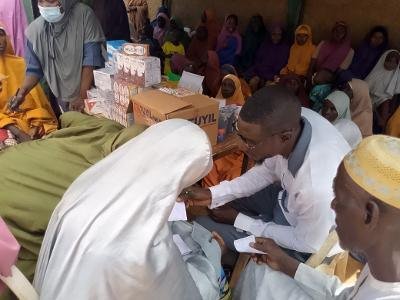
Kaduna, UNICEF inaugurate mobile healthcare outreach in Mashi Gwari
Kaduna State Government, with support from UNICEF, has inaugurated an integrated mobile healthcare outreach in Mashi Gwari community, delivering essential services directly to residents cut off by distance and cost of accessing medical care.
Voice Media Trust (VMT NEWS) reports that Kaduna, UNICEF inaugurate mobile healthcare outreach in Mashi Gwari, the outreach took place on Wednesday at Mashi Gwari in Afaka Ward, Igabi Local Government Area of Kaduna State as part of efforts to expand healthcare access.
Habiba Abubakar, Monitoring and Evaluation Officer for the Tuberculosis, Leprosy and Buruli Ulcer Control Programme, said the government was intensifying outreach to hard-to-reach communities to improve access to essential health services.
She explained that the intervention targeted underserved areas where residents faced significant barriers to basic healthcare, particularly affecting women, children, and other vulnerable groups in rural communities.
Read Also: Kachikwu backs court verdict nullifying ADC congresses
According to her, Mashi community was identified as a zero-dose area, indicating low immunisation coverage and increased risk of preventable disease outbreaks requiring urgent health interventions.
Abubakar said that poor immunisation uptake increased outbreak risks, making it necessary for health authorities to prioritise such communities for integrated healthcare services and targeted medical outreach programmes.
She added that the outreach included services on nutrition, malaria, tuberculosis, and other conditions alongside health education to improve awareness and encourage utilisation of available healthcare services.
The officer said the programme targeted children under five, pregnant women, nursing mothers, and the elderly while also screening the general population for tuberculosis and related diseases.
She emphasised that tuberculosis remained a public health concern affecting all age groups, which informed the inclusive design of the outreach intervention across the community.
Abubakar said turnout had been encouraging, attributing success to prior advocacy and engagement with religious and traditional leaders who mobilised residents for participation in the exercise.
Dinesh Agrawal, Chief, Decision Support in the SRM Section, Division of Financial and Administrative Management at UNICEF Headquarters in New York, emphasised the impact of integrated mobile services.
He said the approach had improved healthcare delivery in communities by bringing essential services closer to underserved populations.
He emphasised that fully equipped mobile units allowed residents access to multiple health services within their communities, removing barriers of distance and cost while improving service delivery efficiency.
Agrawal said the collaboration between government, communities, and UNICEF was yielding positive results and improving healthcare access, describing the intervention as impactful and encouraging for child health outcomes.
The Village Head of Tsohuwar Mashi, Mr Luka Mashi, expressed gratitude for the outreach, saying it was the first time such an intervention had reached the community directly.
He said residents previously travelled long distances to access similar services, describing the new outreach as a major relief for households facing health challenges and limited healthcare access.
Women leader Mrs Nike Okedere said she mobilised residents after receiving information from the village head, going door to door and using community networks to encourage participation in the outreach.
