
NAN MD hails retired E-I-C for diligence, professionalism

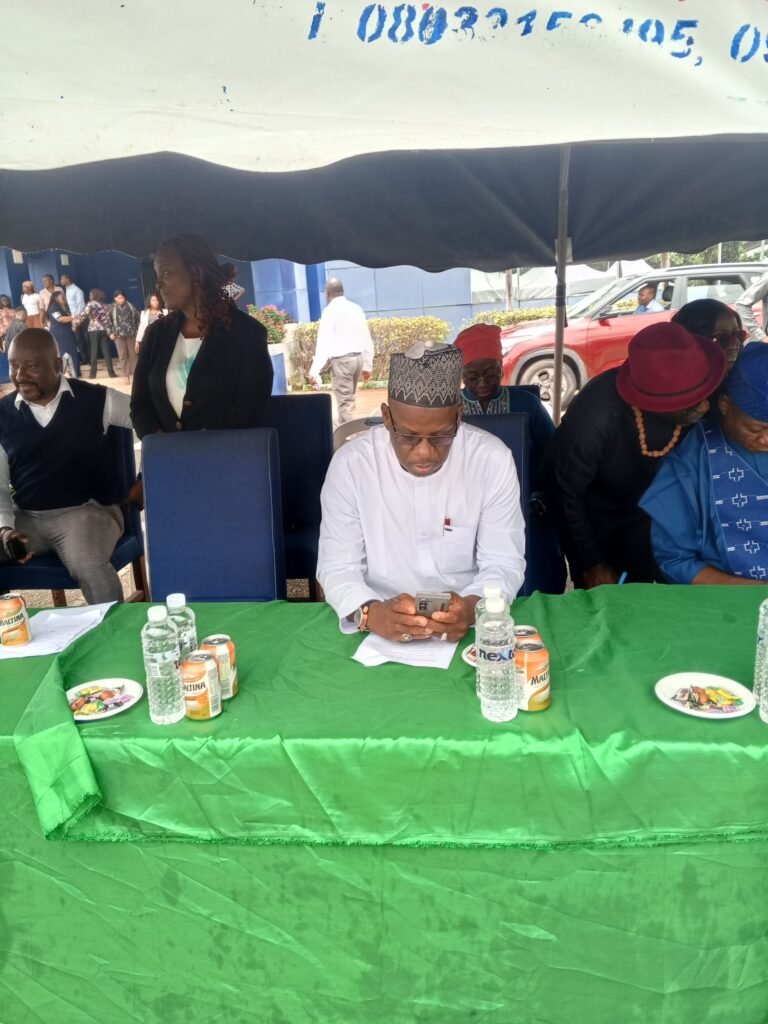
NAN MD hails retired E-I-C for diligence, professionalism
The Managing Director of the News Agency of Nigeria (NAN), Malam Ali M. Ali, has commended the agency’s retired Editor-in-Chief, Mufutau Ojo, for his commitment, diligence, professionalism and effective leadership of the agency’s editorial department.
Ali gave the commendation at a send-off ceremony organised in honour of Ojo, who retired from the agency after attaining the mandatory retirement age of 60.
He described Ojo as a man who never sought the limelight but succeeded in putting the agency in the limelight through his professional accomplishments and editorial leadership.
Ali said working with Ojo for nearly three years had been a learning experience for him, particularly in the areas of commitment, diligence, news management and editorial gatekeeping.
“It has been a learning experience for me. Working with him, and before then with Ephraim Sheyin and Silas, has taught me one or two things about commitment and the power of diligence,” Ali said.
He said Ojo had distinguished himself in the agency by becoming one of the few persons who joined NAN from outside and rose through the ranks to become Editor-in-Chief.
According to him, Ojo, who joined NAN in 2007 as a Level 14 officer, rose steadily through the ranks to the pinnacle of his professional career.
Ali said Ojo’s background in both private and government media had broadened his editorial vision and prepared him for leadership.
The Managing Director observed that it was unusual in Nigeria for people to be showered with encomiums while still alive, stressing that Ojo was fortunate to have received such recognition during his lifetime.
He quoted a literary saying that people should express their appreciation for others while they aare alive rather than wait until their death to write glowing tributes about them.
Ali also described the position of editor-in-chief as a highly demanding one, saying the office was not necessarily democratic because editors had to make difficult decisions under intense pressure.
According to him, news gathering, deadlines, editorial filtration and gatekeeping require editors to work under enormous pressure while ensuring that factual, grammatical and typographical errors do not get into published reports.
“One slight error by an editor can send a whole country or even a continent into conflagration,” he said.
Ali recalled his experience as Deputy Editor of ThisDay in 2002, when a controversial article published by the newspaper attracted serious consequences, including threats against him.
He said the experience demonstrated the enormous responsibility placed on editors and the need for them to remain diligent at all times.
The NAN boss also commended Ojo for his availability and responsiveness, recalling instances when he would contact him at odd hours over urgent editorial and professional matters.
He said Ojo often responded promptly, even when contacted at 1 a.m. or 2 a.m., particularly when sensitive stories generated political pressure.
Ali said professional gatekeeping was crucial in protecting the credibility of the agency, particularly in an era when stories originating from social media were sometimes wrongly attributed to NAN or deliberately twisted to serve political interests.
He said the appointment of Ojo’s successor, Mrs. Hadiza Aliyu, was based primarily on competence and professionalism rather than gender, religion or geographical considerations.
Read Also: Army deepens welfare drive, prepares senior officers for…
“Hadiza Aliyu, no relation of mine—although I am also Aliyu—is succeeding Ojo not because of her gender, faith or where she comes from, but because of competence,” he said.
The Managing Director said competence had similarly guided the elevation of previous editorial leaders, including Ojo and former Editor-in-Chief Ephraim Sheyin.
Ali also stressed the importance of a stable home front to the success of media managers and editors.
“Editors need a safe haven. For Ojo to flourish as a writer and an excellent gatekeeper, the stability of the home front was very important,” he said.
He urged younger journalists and even experienced staff to learn from corrections made by editors and avoid repeating the same mistakes.
Ali described Ojo’s retirement as “not goodbye, but see you later,” stressing that the outgoing E-I-C had made significant contributions to NAN.
He recalled that former Editor-in-Chief Ephraim Sheyin and others had benefited from Ojo’s experience and support during their tenure.
Ali said Sheyin had been brought into the agency’s editorial department because of the value he could add to the organisation, adding that he had contributed significantly since rejoining NAN.
He further disclosed that the agency had resisted political pressure to appoint individuals with limited editorial experience to sensitive positions in the editorial department.
“We said no! It did not go down well with many people, but we said no because we are professionals before we are politicians,” Ali said.
He reaffirmed the commitment of NAN to professionalism, competence and editorial independence in the management of the agency.
Ali wished Ojo a fulfilling retirement and expressed confidence that his contributions to NAN would remain part of the agency’s history.
