
Out-of-school children: Tackling a stubborn social crisis

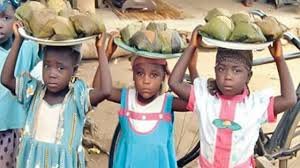
Out-of-school children: Tackling a stubborn social crisis
By Kayode Adebiyi, News Agency of Nigeria (NAN)
For the seventh year in a row, UNESCO’s 2026 Global Education Monitoring (GEM) Report released recently indicates an increase in children missing out on education, with the global total now hitting 273 million.
According to the report, the increase is driven by population growth, conflicts, and dwindling budgets.
The report said that progress in keeping children in school had slowed across almost every region since 2015, with a sharp deceleration in sub-Saharan Africa, mostly due to population growth.
“Several crises – including conflict – have also derailed progress; over one in six children live in conflict-affected areas, representing millions of additional children out of school beyond those captured in the statistics.
“This reality is particularly urgent in the Middle East today, where ongoing regional tensions have forced many schools to close, leaving millions of children out of the classroom and at heightened risk of falling behind,” UNESCO said.
UNESCO Director-General, Khaled El-Enany, described the situation as alarming, saying the report indicated that more young people are being deprived of education globally.
“This report confirms an alarming trend, with more and more young people deprived of education around the world each year.
“However, there is hope. Since the year 2000, enrolment in primary and secondary education has increased overall by 30 per cent, and many countries are making meaningful progress.
“UNESCO remains fully mobilised to collaborate with governments and partners to expand learning opportunities for all, in ways that respond to local realities and give every learner a fair chance to build their future,” he said.
The report was, however, quick to state that many countries were making significant progress in reducing their out-of-school rates, some up 80 per cent since 2000.
For instance, it said while Madagascar and Togo have reduced their rates among children, Morocco and Vietnam have done so among adolescents.
Also, Georgia and Türkiye have reduced their out-of-school population among youths, just as Côte d’Ivoire has halved its out-of- school rates across all three age groups during the same time.
The report highlights the importance of national context when setting targets and designing policies and programmes to tackle the challenge.
Observers say the irony about the out-of-school statistics is that 1.4 billion students enrolled in school in 2024, an increase in global enrolment by 327 million or (30 per cent) in primary and secondary education since 2000.
The Director of the GEM Report, Manos Antoninis, said progress in reducing out-of-school rates should be weighed against both national and global contexts.
“Progress is not one-size-fits-all because context is so frequently overlooked. National targets must be both ambitious and rooted in what is genuinely achievable.
“Global targets should then be the sum of these commitments, not the other way around,” he said.
Closer home, out of the estimated 98 million children out of school in sub-Saharan Africa, Nigeria is responsible for around 20 million, making it the highest number in the world.
According to an article published by the Nigeria Health Watch, Nigeria’s high rate is driven by a combination of population surge, extreme poverty, insecurity, socio-cultural norms, and infrastructural deficiency.
Dr Segun Borode, a child development expert, said conflicts and poverty were the biggest drivers of out-of-school rate in Nigeria.
“Of course, just like many other social crises, there is often a combination of factors responsible for either increase or reduction of cases.
“However, the biggest challenges we have in terms of factors leading to the number of children we have out of school are insecurity and poverty.
“If you look at the annual report closely, you discover that the situation is not evenly distributed nationally, just like it is not evenly distributed globally.
“The North-East and North-West geopolitical zones account for more than 60 per cent of the Nigeria’s out-of-school population.
“States such as Kebbi, Sokoto, Yobe, Zamfara, often rank highest (over 60 per cent) when it comes to out-of-school children. Conversely, Imo, Anambra, Ekiti, Lagos, Abia have the lowest cases, most less than 6 per cent.
“If you put these same states in poverty and insecurity matrix, you will find out that the indices are similar,” he said.
Read Also: Yobe approves weigh-in allowance for media workers
Borode, however, added that poor infrastructure, poor remuneration for teachers, grossly inadequate funding of education and cultural issues such as gender discrimination contribute significantly to the crisis.
He said that, apart from government at all levels tackling insecurity and reducing poverty, education should be incentivised to make both teaching and learning enjoyable.
He noted that the 2026 GEM Report highlighted an increase in enrolment, while of out-of-school rates continue to also increase.
“It means we are not keeping those children in school after getting them into school; this is why we need to make parents, teachers and students see learning as a shared desire.
“Parents should be willing and able to entrust their children to both teachers and the system, while teachers should be motivated enough to play their role.
“Students should not be burdened by anything other than enjoying learning in an atmosphere conducive enough for them to want to return,” he said.
A public school teacher, who preferred to be called Ngozi, said although the big issues of insecurity, poverty and beliefs persist, the school feeding progrmme implemented by the government had a positive effect in reducing out-of-school rate.
“During my youth service, I taught in a primary school where the school feeding programme was being implemented. Enrollment increased because parents were relieved of the burden of providing lunch for their children.
“Also, the children looked forward to their lunch so they didn’t want to miss school. I do not know what has happened to the progremme,” she said.
Nigeria’s National Home-Grown School Feeding Programme (NHGSFP) was launched in 2005 by former President Olusegun Obasanjo and revamped in 2016 by the late former President Muhammadu Buhari.
The programme aims to improve health, enrollment, and learning outcomes in public primary schools.
By providing daily nutritious meals to millions of pupils using local farm produce, it also aims to create jobs for local cooks and strengthening agricultural value chains.
The Buhari administration said in 2018 that it fed 5.5 million pupils daily under the programme in 2017 and 8,260,984 pupils in 45,394 public primary schools across 24 states in 2018.
It also said that more than 80,000 direct jobs were created from the programme; with 87,261 cooks engaged in the 24 participating states.
It said all 36 states of the federation and the FCT would eventually benefit from the programme.
However, the programme faced challenges, including funding constraints, logistical issues, and a need for greater transparency and accountability.
Ngozi said the NHGSFP should not only be revamped, but also be scaled up.
“If we want to see more children in school, especially in rural areas and urban slums, the programme should be redesigned and expanded,” she said.
Other stakeholders, however, say reducing the number of out-of-school children in Nigeria requires more than handouts and incentives.
The allocation of N484.2 billion to the education sector in the 2025 budget represents approximately 10.75 per cent to 10.79 per cent of the total budget.
This is worthy of commendation, because it was the highest percentage share of the budget dedicated to education in 10 years.
However, analysts say it is still not in the region of between 15 and 20 per cent recommended by UNESCO.
They also call for the enhancement of school safety through programmes such as the Safe School Initiative (SSI), implementation of conditional cash transfers for poor families, and enforcement the Child Rights Act.
A report by Research on Improving Systems of Education (RISE) suggests that both governmental and non-governmental efforts are necessary to tackle the current situation through the use of education innovations such as the Accelerated Education Programme.
For stakeholders like Borode, there is a need to also engage communities to change cultural attitudes and provide flexible, alternative learning pathways. (NANFeatures)
