
Second chance education restores hope for married girls in Kaduna

Second chance education restores hope for married girls in Kaduna
By Aisha Gambo, News Agency of Nigeria (NAN)
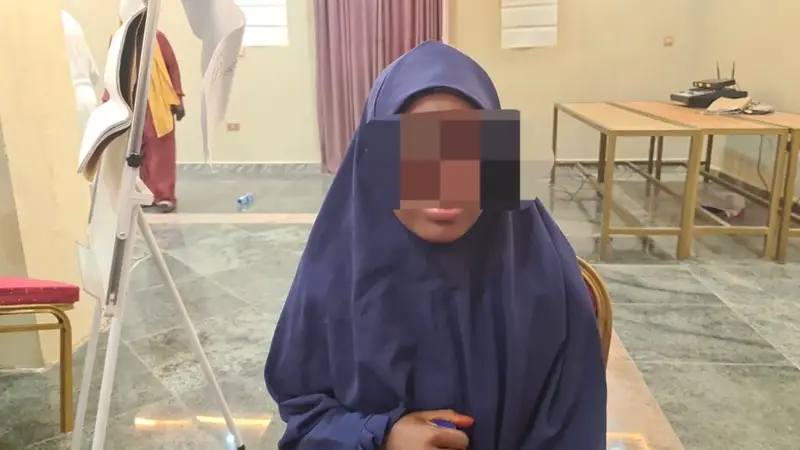
In Gabari village, Kufena, Zaria Local Government Area of Kaduna State, young Halira Nuhu (not real name) is hawking “Fura da Nono”, a meal made from cow milk and millet, during school hours.
Nuhu dreams of becoming a doctor, but her condition would not allow her accomplish that dream.
In her village, boys’ education is prioritised, while girls are sent to hawk or married off early.
At 12, Nuhu was given out in marriage to her cousin.
This, indeed, reflects the reality of many girls in her community.
“I was married off at the age of 12, I’m now 15 and I have one son; in my tradition parents choose spouses for their children and girl child education is not prioritised, we go hawking.
“I attended only primary school and stopped because my father was not financially stable; so, my mother said I should hawk before a befitting spouse is chosen for me,” she said.
Similarly, Saude Maude (not real name), a resident of Hanwa, Zaria, got married at the age of 13.
As an orphan who lost her father while she was still a baby, Maude could not finish secondary school due to poverty.
“It was my mother who took care of me and she couldn’t pay for my school fees after JSS 3. So when I got a suitor, I was married off; I was devastated but there was nothing I could do,” she laments.
According to the United Nations Children’s Fund (UNICEF), about 7.6 million girls in Nigeria are out of school, including 3.9 million at the primary level and 3.7 million in junior secondary school.
UNICEF further reports that more than half of girls of basic education age are not enrolled.
Evidence from various studies also indicates significant dropout rates between primary and junior secondary levels.
Experts, however, attribute this trend to a combination of factors, including poverty, early marriage, unintended pregnancy, gender-based violence, limited awareness, and inadequate parental support.
Consequently, these challenges continue to restrict many girls’ access to education and contribute to higher dropout rates, especially as they transition from primary to secondary school.
A report by Save the Children says 78 per cent of girls in the northern region of Nigeria are married before the age of 18, while 44 per cent of girls are married before their 18th birthday across the country.
In Kaduna State, the School Census Report revealed that 25 per cent of adolescent girls dropped out of school due to factors such as early marriage, insecurity, poverty, among others.
In response to this development, the Kaduna State Government developed an Education Policy in 2019, which made provision for Second Chance Education (SCE).
The state also developed a 10-year Education Sector Plan (ESP), named Kaduna State 2019–2029 Education Sector Strategic Plan.
The plan is a comprehensive and strategic framework developed with the support of development partners to guide the planning, implementation, and evaluation of education policies and programmes.
The Director of Planning, Kaduna State Ministry of Education, Salisu Lawal, stated that SCE is being implemented with support from development partners like the Adolescent Girls Initiative for Learning and Empowerment (AGILE) for girls who dropped out due to marriage or pregnancy.
Recently, Kaduna State validated the Gender in Education Policy to tackle structural barriers such as safety, access, and retention that disproportionately affect girls.
The policy is aimed at addressing the specific needs of male and female learners across different age groups and communities.
Read Also: Bayelsa, Bauchi edge Lagos to win national schools volleyball…
Notably, the initiative goes beyond general assumptions about gender and instead focuses on how education can be delivered effectively to different categories of learners.
Second Chance Education is one component of the broader policy, which supports adolescent married girls and mothers with learning materials, uniforms, and conditional cash transfers to motivate the girls and their families.
Zainab Maina-Lukat, the Technical Assistant on Education Systems Strengthening, AGILE project, said the policy was designed to address inequalities and barriers within the education sector.
She said the policy proposes practical solutions to support young mothers and female teachers, including the establishment of early childhood care centres within schools to enable them continue their education or careers.
According to her, the policy recognises that learners face different challenges depending on their age, gender, and circumstances.
The policy also highlights disparities in academic progression, especially in science education.
While about half of girls in private schools transition into science streams, the figure is significantly lower in public schools.
Albeit these challenges, being married and giving birth did not stop Nuhu and Maude, who dropped out of school due to tradition and poverty, from pursuing their dreams.
Nuhu has now returned to school and is in JSS one through the SCE supported by AGILE.
Her husband and father gave their consent for her to continue her education after a mobilising officer enlightened them on the programme.
“My father is excited that I am going back to school and my husband supported me with uniform and learning materials,” she says.
However, the major challenge Nuhu faces is balancing married life and education.
As a nursing mother with the zeal to learn, she has to keep her 11-month-old baby at her in-laws’ place before going to school.
“No body will take care of my baby when I’m in class and I want to concentrate, so I have to keep him with them,” she said.
Transportation from her husband’s house to school is another challenge.
Nevertheless, Nuhu wakes up early and treks for 40 minutes to get to school.
Returning to school has given her a sense of responsibility.
She regrets marrying early, saying she still feels she is not ripe for marriage at 15.
She now hopes to become a girl child advocate, where she will sensitise and empower young girls to complete at least Senior Secondary School before marriage.
Likewise, Maude, now 17 with two children, has returned to school and is in SS1, dreaming of becoming a journalist.
She said she would work hard to ensure her children get better education before marriage.
Ummi Bukar, the Programme Director, Participatory Communication for Gender Development Initiative (PAGED Initiative), says extending Nigeria’s Universal Basic Education (UBE) policy to 12 years would improve access to secondary education, especially for girls.
“Extending the policy to senior secondary education would ensure that girls remain in school longer and emerge as more productive members of society.
“It is not enough to create programmes; they must reflect the realities of the target group. Many young mothers cannot return to school because there are no support systems such as childcare or flexible learning hours,” she says.
She, therefore, called for stronger enforcement of existing laws, increased investment in education, and inclusive policies that address the diverse realities across states.
In conclusion, as married adolescent girls like Nuhu and Maude return to the classroom, it is necessary that they receive the support systems required to thrive. (NANFeatures)
