
NCWS trains 500 Adamawa women on briquette production to curb deforestation

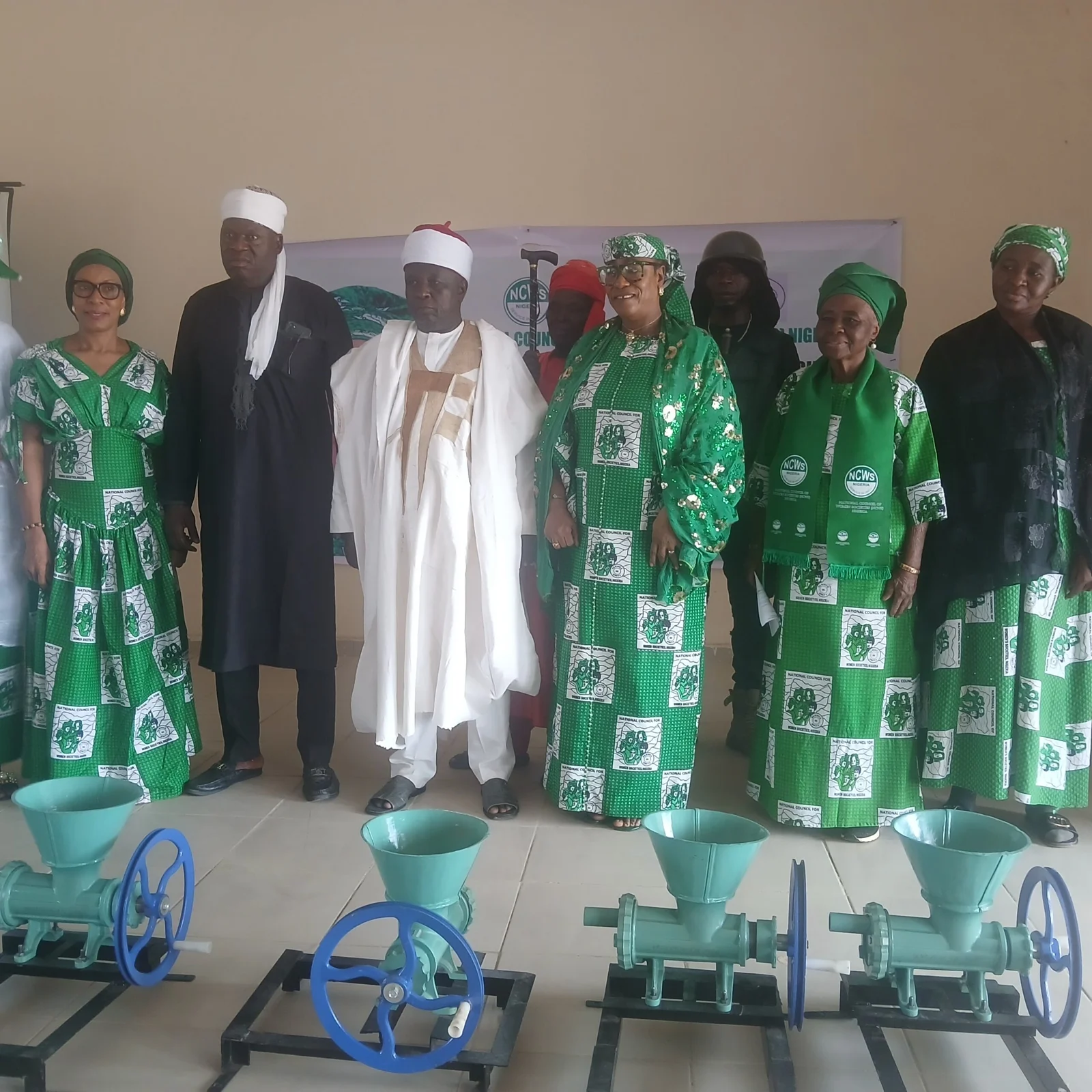
NCWS trains 500 Adamawa women on briquette production to curb deforestation
The National Council of Women’s Societies (NCWS) trains over 500 women in briquette production to combat deforestation in Adamawa.
The president of NCWS, Mrs Edna Azura, disclosed this at a one-day training workshop on Friday in Hong Local Government Area (LGA).
Azura said the training, supported by the International Council of Women and the Lydie Rossini Fund Programme, was part of efforts to empower women through sustainable livelihood initiatives.
She said the programme was designed to equip women and girls with practical skills in briquette production using locally available waste materials as an alternative to firewood.
Azura said that the initiative formed part of NCWS’s broader climate action efforts in Adamawa.
According to her, beneficiaries will also receive briquette production machines to support their businesses and ensure sustainability.
She recalled that the council carried out tree-planting activities in Hong and Mayo-Belwa LGA, as part of its contribution to climate change mitigation and environmental sustainability.
“The exercise demonstrated our commitment to protecting the environment, restoring green communities and encouraging sustainable living practices among women and families.
Read Also: NEMA upscales flood preparedness advocacy in Bauchi
“Today’s briquette production training further strengthens that commitment by providing an alternative energy source that reduces dependence on firewood and helps combat deforestation,” Azura said.
She described investment in women’s empowerment as key to building stronger families, healthier communities and national development.
She identified poverty, unemployment, environmental degradation and reliance on firewood as major challenges affecting rural households, especially women.
According to her, briquette production offers a cleaner and safer energy alternative while also creating income-generating opportunities.
The NCWS President urged beneficiaries to utilise the knowledge gained and share it within their communities to expand the impact.
One of the participants, Mrs Mairo Buba, expressed appreciation to the organisers, describing the training as beneficial to her and future generations.
Buba added that members of her community had resolved to adopt environmentally friendly practices to protect their surroundings.
Earlier, the group paid a courtesy visit to the traditional ruler of Hong, Dr Alheri Nyako, the Tol Huba, who commended NCWS for its efforts in empowering women.
Nyako pledged his support for initiatives aimed at improving livelihoods and protecting the environment.
