
Bridging the Deficit: TETFund Champions PPPs and Digital Transformation in Tertiary Institutions

Bridging the Deficit: TETFund Champions PPPs and Digital Transformation in Tertiary Institutions
By Hannatu Lot
The Tertiary Education Trust Fund (TETFund) has urged heads of tertiary institutions across the country to embrace public-private partnerships (PPP) to address accommodation shortages on campuses, disclosing that less than 50 per cent of students currently live within their institutions.
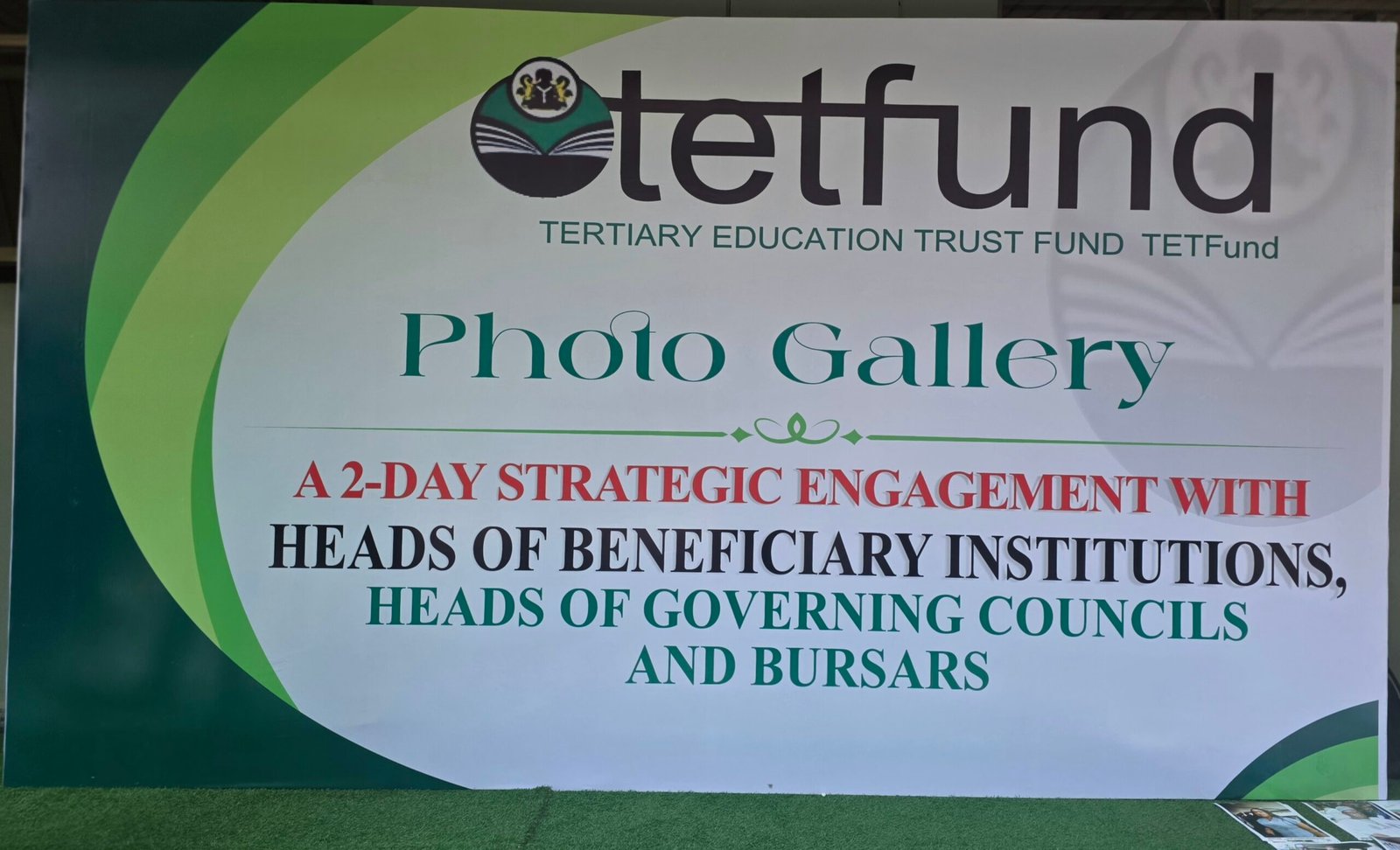
The academic landscape of Nigeria is standing at a critical juncture. Within the bustling halls of Abuja, a gathering of vice-chancellors, governing council leaders, bursars, and key education stakeholders convened for a high-stakes two-day strategic engagement.
Convened by the Tertiary Education Trust Fund (TETFund), the dialogue was not merely an administrative review of ongoing projects and the shaping of 2027 disbursement guidelines, but a sobering reckoning with fiscal reality.
Against the backdrop of dwindling national revenues, soaring construction costs, and an expanding student population, leadership across the tertiary sector delivered a unified message: the traditional model of relying solely on government funding is no longer sustainable.
At the heart of the discourse was TETFund’s Executive Secretary, Arc. Sonny Echono, who laid bare the economic pressures straining public institutions. With government budgets pulled in competing directions by national security, healthcare, and infrastructure demands, the operating environment for higher education has grown increasingly adverse.
To bridge this yawning funding gap, Echono issued a passionate call for institutions to aggressively embrace Public-Private Partnerships (PPP). Rather than waiting on constrained state coffers, universities, polytechnics, and colleges of education were urged to unlock alternative streams of revenue and development by inviting private sector investment into viable campus ventures.
The blueprint for these partnerships extends far beyond abstract financial engineering. Echono pointed to high-impact, revenue-generating, and service-oriented projects ripe for private collaboration, such as student housing, commercial farming ventures, modern shopping facilities, and joint research commercialisation. Yet, he voiced deep concern over the lukewarm uptake of TETFund’s flagship hostel partnership initiative.
Under this framework, institutions are only required to provide the land while private investors shoulder the heavy burden of construction and management. With fewer than 15 per cent of Nigerian students currently housed on campus—leaving the rest vulnerable to soaring rents and insecure off-campus housing—this private-sector synergy represents an urgent, underutilized lifeline for student welfare.
Beyond bricks and mortar, the Abuja engagement cast a sharp spotlight on the urgent need for technological modernization within Nigerian classrooms. Echono expressed frustration over the slow adoption rate of TETFund’s digital learning platform, a robust portal designed to grant students and lecturers unlimited access to online lectures, global research databases, and virtual libraries at no additional cost after onboarding.
He challenged academic administrators to elevate expectations, setting a clear benchmark that at least 60 per cent of teaching staff should be entirely conversant with digital curriculum delivery. Technology, he emphasized, must be embraced without fear if Nigerian graduates are to compete globally.
Safety and security also took center stage as a fundamental prerequisite for academic excellence. Amid rising security anxieties across the country, Echono urged institutions to fortify their perimeters with robust physical and technological infrastructure, including advanced surveillance systems, solar-powered lighting, reliable communication equipment, and dedicated patrol vehicles.
He stressed that security cannot be achieved in isolation, calling for proactive synergies with local security agencies and host communities to craft customized safety frameworks.
The discussions also captured the nuanced perspectives of sector regulators and academic bodies. Dr. Mrs. Angela Ajala, Executive Secretary of the National Commission for Colleges of Education (NCCE), lauded TETFund’s transformative interventions, particularly in light of the new dual mandate enabling colleges of education to award degree qualifications alongside traditional certificates.
However, she cautioned that this evolution demands a recalibration of funding priorities toward digital skills, modern information and communication technology, expanded student accommodation, and green energy solutions. Reminding administrators of their fiduciary duties, Ajala delivered a stern warning on fiscal discipline: spend allocations judiciously, finish initiated projects, and account for every naira as if the institution’s future depends on it—because it truly does.
Read Also TETFund pushes PPP to bridge tertiary education funding gap
Adding a vital voice of caution and advocacy, Professor Christopher Piwuna, speaking as a representative of the Academic Staff Union of Universities (ASUU), underscored the union’s openness to progressive reform while demanding rigorous deliberation.
He insisted that sweeping policies must undergo thorough consultation and planning to prevent unintended negative consequences on the academic ecosystem.
Furthermore, he drew a hard red line regarding campus integrity, cautioning against the indiscriminate allocation or encroachment of university lands by political officeholders and private business interests. University property, he asserted, is a sacred public trust that must remain strictly insulated from personal or political gratification.
Ultimately, as the strategic engagement concluded, the path forward for Nigerian tertiary education became clear. Overcoming the funding crisis will require a delicate balancing act: forging bold, innovative alliances with the private sector to build modern infrastructure, fully digitizing the academic experience, and fiercely protecting institutional assets, all while maintaining uncompromising standards of accountability and inclusive planning.
