
The Architect of Order: Reflecting on the Exemplary Leadership and Institutional Transformation of Gen. Buba Marwa

The Architect of Order: Reflecting on the Exemplary Leadership and Institutional Transformation of Gen. Buba Marwa
By Hannatu Lot
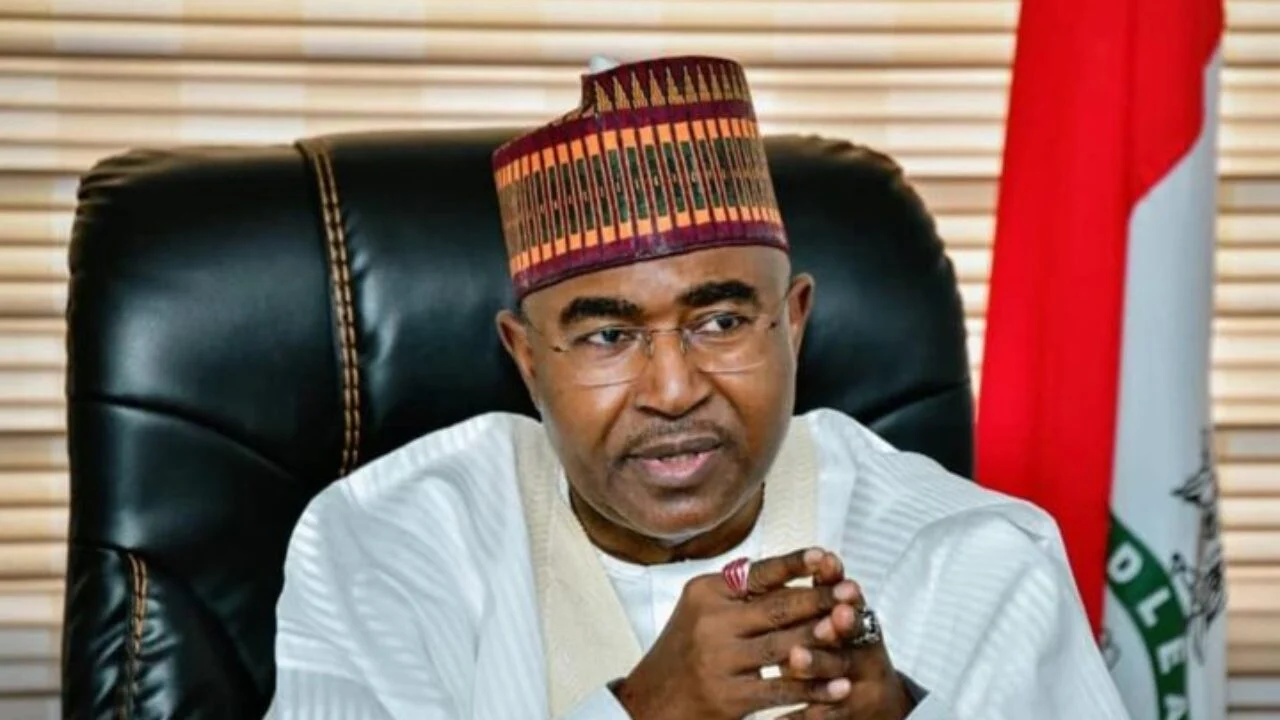
In the landscape of contemporary Nigerian governance, the quest for public administrators who combine clinical military discipline with profound intellectual depth is a perpetual challenge. Amidst this backdrop, Brigadier General Mohammed Buba Marwa (Retd), CON, OFR, stands out as a definitive model of organizational excellence, unwavering integrity, and transformative statesmanship.
From his early days as a highly decorated tactical officer to his legendary administrative tenures in Borno and Lagos States, and his current historic campaign at the helm of the National Drug Law Enforcement Agency (NDLEA), Marwa’s half-century of public service presents a flawless blueprint in principled leadership.
So profound is his operational ethos that prominent national figures and educational advocates have strongly campaigned to have his administrative strategy formalized into the academic curricula of Nigerian universities, offering local students a homegrown alternative to traditional Western political models.
A Lineage of Service and Intellectual Rigor
Marwa’s life story reads like a continuous dedication to the defense and structural development of Nigeria. Born into a celebrated military family on September 9, 1953, in Kaduna, his lineage spans four generations of active service.
His grandfather, Captain Marwa (Buba Yola), fought in the historic Royal West African Frontier Force; his father, Buba Marwa, was an accomplished officer in the Nigerian Armed Forces; and this heritage of duty continues through his son, who reached the rank of major by 2019.
This deep familial immersion in discipline led a young, 12-year-old Marwa to enroll in the Nigerian Military School (NMS) in Zaria in 1966, followed by officer training at the regular combatant course of the Nigerian Defence Academy (NDA) in Kaduna. Commissioned into the elite Nigerian Army Reconnaissance Corps (NARC) in 1973, Marwa did not limit his horizon to technical combat proficiency alone.
Recognizing that modern warfare and state governance require intellectual depth, he pursued advanced elite education in the United States, earning two prestigious master’s degrees:
* Master of Public and International Affairs -from the University of Pittsburgh.
* Master of Public Administration (MPA)- from the world-renowned Harvard University.
This combination of field-tested military precision and Ivy League administrative scholarship laid the foundation for a career marked by institutional transformation.
The Administrative Blueprints: Borno and Lagos States
Long before his current national assignment, Gen. Marwa established an enduring reputation as a highly resourceful and compassionate civilian administrator during his military governorships.
Borno State (1990–1992)
Appointed as Military Governor under the Babangida administration, Marwa fundamentally reshaped the state’s social architecture. Facing a severe regional drought, he established Nigeria’s first state-level Ministry of Water Resources to directly tackle chronic water scarcity.
Using direct labor to optimize state resources, his administration built vital road networks, completed the long-delayed Maiduguri International Hotel, and constructed seven general hospitals in just 18 months, dramatically expanding healthcare access across the state.
To combat rising cross-border crime, he introduced “Operation Zaki,” the nation’s pioneer joint military patrol.
Lagos State (1996–1999)
Marwa’s term as Military Administrator of Lagos State during a highly volatile political transition cemented his position as a household name. Stepping into a city plagued by systemic crime and gridlocked infrastructure, Marwa rolled out people-centric initiatives that transformed the metropolis:
* Operation Sweep:– A highly coordinated, joint security outfit that successfully suppressed violent crime across the state.
* Operation 250 Roads:- A direct-labor urban rehabilitation initiative that bypasses slow bureaucracy to rapidly rebuild vital economic corridors, including the dualization of the Mile 12-Ikorodu Road.
* The “Keke Marwa” Revolution:– To address public transport deficits and economically empower disenfranchised youth (“area boys”), he introduced commercial tricycles into the state’s transport master plan—creating a sustainable transport system that remains ubiquitous across Nigeria today.
* Healthcare & Education:-He established free malaria treatment programs, built several public housing units, and laid the foundations for elite regional learning by establishing the Lagos State University College of Medicine (LASUCOM).
Restructuring the Drug War: The NDLEA Renaissance
When President Muhammadu Buhari appointed Gen. Marwa as Chairman and CEO of the NDLEA in January 2021, the agency was widely seen as underfunded and inefficient. Drawing on his prior expertise as Chairman of the Presidential Advisory Committee for the Elimination of Drug Abuse (PACEDA), Marwa immediately launched a comprehensive institutional overhaul.
Recognizing his exceptional performance, President Bola Tinubu renewed his appointment in November 2025 for an extended five-year term, securing his leadership through 2031.
Marwa’s strategy at the NDLEA—often studied by international analysts as the “Buba Marwa Model”—rests on three pillars: ruthless interdiction, institutional reform, and social advocacy.
1. Ruthless Supply Disruption and Enforcement
Marwa shifted the NDLEA from reactive policing to intelligence-led disruptions of international drug cartels. Under his command, the agency expanded its footprint from 14 to 37 specialized commands, creating five strategic elite command hubs across key exit and entry points, including the Lagos Command, FCT Command, Murtala Muhammed International Airport (MMIA), Apapa Port, and Tin Can Island Port.
2. Institutional and Personnel Reforms
Marwa recognized that an agency is only as effective as its officers. He broke years of institutional stagnation by executing massive promotion exercises for over 8,500 personnel. Furthermore, to institutionalize high morale and long-term dignity, he commissioned the first-ever permanent housing barracks in the 35-year history of the NDLEA.
3. Holistic Public Health and Community Advocacy
Understanding that enforcement alone cannot cure drug dependence, Marwa introduced the National Drug Control Master Plan (NDCMP) 2021–2025. He launched the highly successful *War Against Drug Abuse (WADA)- social advocacy campaign, transforming local communities, schools, and traditional institutions into active partners against substance abuse.
Under his stewardship, the NDLEA has provided medical counseling, treatment, and structural rehabilitation to over 29,400 individuals.
Quantifying Excellence: The Data of Success
The scale of Gen. Marwa’s achievements at the NDLEA is best captured by the numbers. Between January 2021 and early 2025, his proactive enforcement operations yielded unprecedented results:
| Metric Category | Operational Achievement (2021 – 2025) |
| Total Drug Suspect Arrests | Over 73,000 drug offenders and mules apprehended |
| High-Profile Cartel Takedowns | 68 major drug barons arrested and dismantled |
| Volume of Illicit Substances Seized | Over 15 Million Kilograms of narcotics confiscated |
| Secured Legal Convictions | Over 11,628 offenders successfully convicted |
| Agricultural Farm Eradication | 1,330+ Hectares of cannabis plantations destroyed |
Addressing the National Security Nexus
Marwa has consistently highlighted the direct causal connection between drug trafficking and Nigeria’s broader security challenges, including terrorism, banditry, and kidnapping.
His research-driven briefs reveal that up to 90 percent of perpetrators of violent crimes operate under the influence of illicit substances.
By targeting and cutting off illicit financial flows and destroying synthetic drug labs, the NDLEA under Marwa has effectively weakened the material support systems of non-state armed groups in the Northeast and Northwest, positioning drug control as a foundational pillar of national defense.
Read Also: Conservationists unveil Nature Photography Awards to spotlight…
Honor, Legacy, and Global Recognition
Gen. Marwa’s journey has not been entirely free of challenges; his relentless enforcement against international networks and political crosscurrents have occasionally drawn unsubstantiated rumors and scrutiny from opposing factions. Yet, his transparency and data-driven equity—evidenced by maintaining inclusive, multi-ethnic personnel leadership within the NDLEA—have consistently cleared his record and reinforced public trust.
A glance at his lifetime of honors showcases a legacy recognized across all sectors of society:
* National Honors:- Conferred as an Officer of the Order of the Federal Republic (OFR) in 2003 and later decorated as a Commander of the Order of the Niger (CON) in 2022.
* Academic Laurels:- Conferred with multiple honorary doctorates, including a Doctor of Humane Letters from Lagos State University (2025) and a Doctor of Public Administration from the University of Nigeria, Nsukka.
* Traditional Tributes:-Awarded prestigious chieftaincy titles across the nation, including the *Atunluse of Ikorodu*, *Aare Agba Akin of Lagos*, and *Ochi Oha I of Umuozzi* in Enugu State.
Conclusion: A Leadership Lesson for the Future
Brigadier General Buba Marwa remains a beacon of hope for public governance in Nigeria. His career serves as a powerful counter-narrative to the challenges of administrative corruption and institutional inertia.
By choosing public welfare over personal gain, showing deep empathy for the people he serves, and maintaining sharp operational discipline, Marwa has shown that excellent leadership is entirely achievable in Nigeria.
As the nation prepares its next generation of administrators, the “Buba Marwa Model” stands as an essential case study in integrity, patriotism, and institutional triumph.
Support Voice Media Trust journalism of integrity and credibility
Good journalism costs a lot of money. Yet only good journalism can ensure the possibility of a good society, an accountable democracy, and a transparent government.
For continued free access to the best investigative journalism in the country, we ask you to consider making a modest support to this noble endeavour.
By contributing to Voice Media Trust, you are helping to sustain a journalism of relevance and ensuring it remains free and available to all.
Donate into:
Dollar Account:
- A/C NO: 3003093745
A/C NAME: VOICE MEDIA TRUST LTD
BANK: UNITED BANK FOR AFRICA
Naira Account:
- A/C NO: 1023717841
A/C NAME: VOICE MEDIA TRUST LTD
BANK: UNITED BANK FOR AFRICA
