
Job creation: FG, NECA harp on AI skills to tackle unemployment

Job creation: FG, NECA harp on AI skills to tackle unemployment
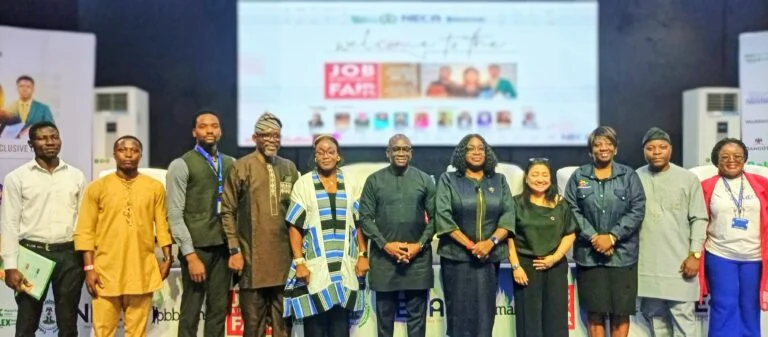
The Federal Government of Nigeria and the Nigeria Employers’ Consultative Association (NECA) have identified Artificial Intelligence (AI) skills, improved employability, and workforce readiness as key tools for tackling unemployment, in line with ongoing efforts on job creation: FG, NECA initiatives.
Giving the goodwill message at the 2026 NECA Job and Employability Fair, held on Thursday in Lagos, the Minister of Labour and Employment, Muhammad Dingyadi, said that such tools would drive inclusive growth in Nigeria.
Dingyadi, represented by the Director, Employment and Wage, Mrs Titilayo Ayemoba, said that having AI skills would help in promoting inclusive employment and preparing Nigerian youths for the future of work.
He said that the inclusion of mandatory AI fluency training at the fair reflected the growing importance of digital literacy and emerging technologies in shaping the future workforce.
“As AI continues to transform industries and redefine job roles across sectors, empowering our youths with these competencies is no longer optional, it is essential,” the minister said.
He commended NECA for organising the fair, noting that the initiative would strengthen employability, enhance workforce readiness and create opportunities for Nigerian youths.
According to Dingyadi, the theme of the fair, ”Empowering Talents, Building Skills and Driving Inclusive Growth”, underscores the need for deliberate investment in human capital development.
He added that Nigeria’s youthful population possessed the energy and innovation needed to drive economic transformation, if properly equipped with relevant and adaptable skills.
Read Also: Lagos APC youths warn against divisive politics in Somolu
Dingyadi said that there was the need for sustained collaboration among government, employers, educational institutions and development partners to bridge existing skills gaps and align workforce capabilities with industry expectations.
He reaffirmed the commitment of the Federal Ministry of Labour and Employment to supporting initiatives that promoted decent work, entrepreneurship, vocational development and digital inclusion.
According to him, inclusive growth can only be achieved when young people, regardless of their backgrounds, have access to opportunities that enable them to contribute productively to national development.
He urged participants at the fair to take advantage of networking opportunities, mentorship programmes, skills training and recruitment engagements available during the event.
Dingyadi thanked NECA and its partners for their contributions toward advancing employability and workforce development in Nigeria.
In his welcome address, the Director-General of NECA, Mr Adewale-Smatt Oyerinde, said that the fair remained a flagship initiative designed to bridge the gap between opportunities and talents.
Oyerinde described the event as a strategic response to unemployment, especially among the youth population.
“This fair is more than an event; it is a deliberate and strategic response to one of the most pressing challenges facing our nation today – unemployment, particularly among our vibrant and capable youth population.
“At NECA, we firmly believe that meaningful employment is not only a pathway to personal dignity and economic independence, but also a cornerstone for national development, social stability and shared prosperity,” he said.
Oyerinde said that the objective of the fair was to create direct engagement between employers and job seekers, enabling participants to access immediate employment opportunities.
He added that the fair also focused on employability enhancement through career guidance, skills development and long-term career support.
“Our goal is not just to help individuals find jobs, but to empower them to build sustainable and rewarding careers,” he said.
The NECA boss commended partners and stakeholders for supporting the initiative, noting that collaboration remained key to reducing unemployment and strengthening Nigeria’s workforce ecosystem.
He encouraged participants to take advantage of networking opportunities, recruitment sessions and career development programmes available at the fair.
In her keynote address, Edalyn Hadjula-Legarde, the Director, Cluster Human Resources, FrieslandCampina WAMCO Nigeria Plc, cited statistics that about 62.5 per cent of Nigerians earn less than N200,000 monthly.
Hadjula-Legarde also said that 37 per cent of employed Nigerians earn less than N100,000; while 0.4 per cent of Nigerians earn above one million Naira as income.
She said that agriculture, telecommunication and trade industries are the largest employers of labour in the country.
Hadjula-Legarde added that ICT/telecommunication, banking and health sectors were the top five hiring industries in 2024, while sales, finance and engineering had the most vacancies in 2024.
