
Nigerian artist urges Africans to reclaim cultural heritage through archives

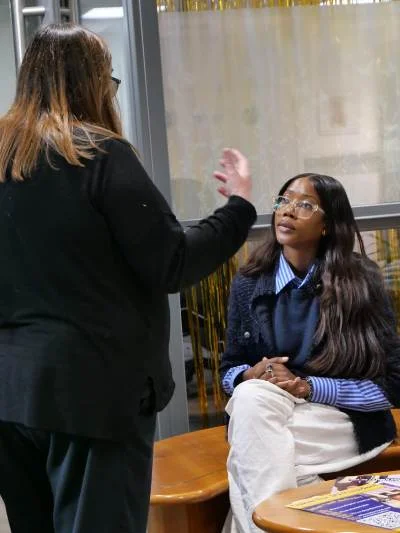
Nigerian artist urges Africans to reclaim cultural heritage through archives
Nigerian artist and researcher, Amanda Offor, urges Africans to reclaim ownership of their cultural heritage and historical narratives through active engagement with international archives, documenting African history and material culture.
Offor, a student at the Slade School of Fine Art, made the call in a memoir she made available to the News Agency of Nigeria (NAN) on Thursday after collaborating with Delphine Mercier, Curator at the Department of Anthropology, University College London.
The collaboration was to correct colonial-era spellings of Nigerian names in UCL’s ethnographic collections database.
“The corrections, carried out on March 20, 2026, involved replacing anglicised spellings such as “Ibo” with “Igbo” and correcting multiple inaccurate spellings of Onitsha in the archive,” she said.
Offor described the intervention as part of a wider effort to decolonise historical records and restore African identities within global institutions.
Quoting Kenyan author and scholar Ngũgĩ wa Thiong’o from his book ‘Decolonising the Mind’, Offor said colonial systems often distorted the identities, histories and cultural confidence of African people.
Read Also: Plan International Nigeria canvasses reforms on basic education…
“The effect of a cultural bomb is to annihilate a people’s belief in their names, in their languages, in their environment, in their heritage of struggle, in their unity, in their capacities and ultimately in themselves.
“Africans must begin to actively engage with publicly accessible archives holding African artefacts and records in order to reclaim authority over their own histories.
“We must see these works for ourselves, study them, and ultimately reclaim authority over our own narratives.
“This is a call to bring the archive home intellectually, culturally and historically,” she said.
Offor explained that the intervention emerged during her research into the cultural and material significance of bronze and brass in Nigerian art, particularly within Edo history and artistic traditions.
She said what began as artistic inquiry later exposed the persistence of colonial distortions within institutional archives.
Speaking on the importance of archives, Offor said unlike exhibitions, which are often temporary and geographically distant, digital archives provide continuous access to historical materials.
She cited the exhibition of Nigerian Modernism at Tate Modern, which featured works by Nigerian modernist Ben Enwonwu.
Offor described such exhibitions as important, noting that archives offered deeper and more sustained engagement with African cultural history.
“The UCL ethnographic collections database contains records of objects held in storage, including details of provenance, acquisition and classification.
“Many of the materials I examined came from the collection of M.D.W. Jeffreys, while related objects are also held by the British Museum.
“Among the corrected records was Item J.0085, catalogued as “Ten pearl buttons,” in which both “Igbo” and Onitsha appeared with inconsistent spellings before being updated.
“Another entry, J.0095, described as “Twisted bronze wire,” was similarly corrected after Onitsha appeared in anglicised form,” she said.
Offor noted that the archive revealed important links between material culture, trade and artistic production across precolonial Nigerian societies.
“This is where the archive becomes more than documentation.
“It allows you to read objects closely and draw connections across time and place.
“Bronze held deep historical significance for Edo civilisation and reflected the sophistication of the Benin Kingdom,” she said.
According to her, the Benin bronzes demonstrate the existence of a highly organised political and economic system dating back to the 13th and 14th centuries.
Offor stressed that African cultural objects should not simply be reduced to “artefacts” but recognised as evidence of advanced knowledge systems, craftsmanship and governance.
The artist said her research also carried personal significance, having begun as an attempt to understand her paternal grandmother’s movement to Anambra, and the wider historical connections between communities.
Reflecting on the corrections, Offor said the process reinforced the importance of Africans actively participating in how their histories are documented and represented globally.
“Correcting these spellings was not merely administrative, it was symbolic.
“It was a refusal to accept a narrative imposed by colonial frameworks.
“I urge Africans not to remain passive in the face of inherited inaccuracies embedded within historical institutions and records.
“In that moment of correction, I felt a profound sense of responsibility and possibility.
“Not because history was rewritten, but because it was acknowledged and adjusted with intention,” she added.
