
The Anatomy of a Failed State: How Nigeria’s Ruling Class Manufactured Its Own Destruction

The Anatomy of a Failed State: How Nigeria’s Ruling Class Manufactured Its Own Destruction
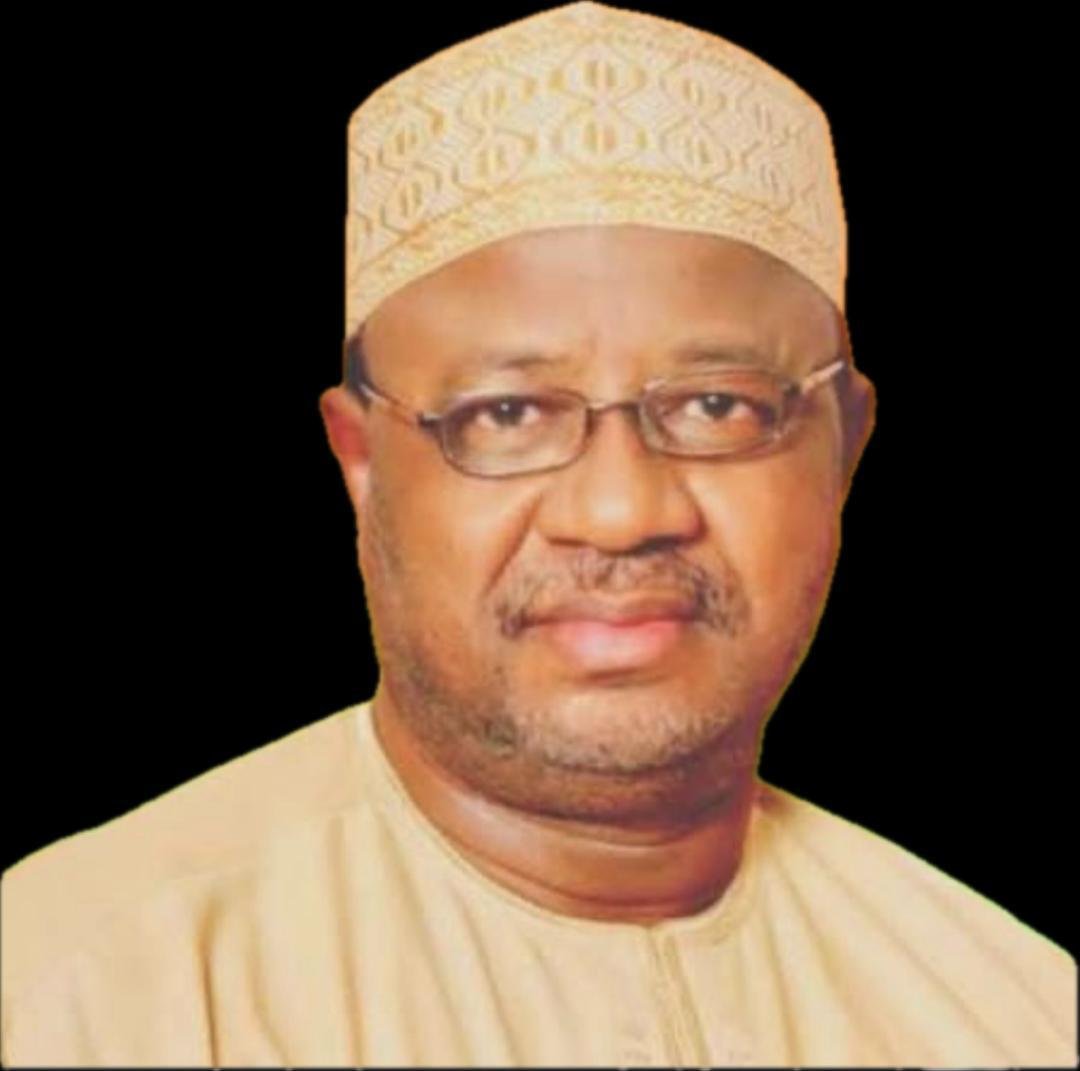
By Umar Ardo, Ph.D
In May, 2013, I wrote an article titled “Co-Relation Between Democracy, Poverty and Insurgency in Nigeria” which central essence was to argue that Nigeria’s persistent insurgencies and insecurity are fundamentally rooted in the failure of democratic governance to deliver social justice, equitable distribution of economic wealth and credible political participation, rather than being driven solely by religion, region or ethnicity. I explained that lasting national security could only be achieved through inclusive economic development, reduction of poverty and inequality, and genuine democratic reforms that restore public trust in government.
- Between 2013 when I wrote that article and now, the insecurity and violence have metastasized across the country proportionate to the increase in leadership failures over the years at all levels of government. The present discourse, therefore, is an epilogue to that article. In other words, it is a treatise on the nexus between elite corruption, institutional decay and the proliferation of violence in Africa’s most populous nation.
- First, is the shredding by our political class the binding Social Contract between the State and the Citizen. By shredding this contract, the political class has invariably created a violence that precedes the bullet and the bomb – the violence of broken promises, of stolen futures, of a social contract torn to pieces by the very hands that swore to uphold it! Nigeria thus stands today as a monument to this pre-emptive violence where the ruling class has so thoroughly betrayed the covenant of governance that the governed have been left with no language but rage, no recourse but rebellion and no sanctuary but the barrel of a gun.
- When the military handed over power to democratic rule in 1999, under the generic parlance of “dividends of democracy”, Nigerians were assured of a high standard of living: peace, security, education, healthcare, power, clean water, economic prosperity, political rights, social justice, transparency and honest leadership. The people trusted. They fought for democracy. They embraced their politicians. They elected them into public offices in the fervent hope that positive change would follow.
- What followed was not change. It was plunder. The democratic constitution delivered liberty and freedom, but the promised high standard of living woefully failed to materialize. Instead, large-scale poverty and hardship spread across the land, chiefly brought about by failed public policies, high-level corruption, electoral malpractices, a compromised bureaucracy, a docile judiciary and a litany of other vices. The result was a glaring disparity never before seen in the history of economic mobility anywhere in the world, with Nigeria ending up as “the poverty capital of the world”! Yet, the massive material wealth of the country became acquired by the very politicians elected into office, while the mass of the citizens struggle daily to survive below poverty level. This is not inequality. This is economic apartheid created and nurtured by the political class.
- The renowned criminologist Ted Gurr captured the mechanics of this catastrophe with surgical precision: “When expectations go up and realities go down, men rebel.” The insurgencies ravaging Nigeria are thus not spontaneous eruptions of primordial hatred. They are calculated responses to failed expectations. Whether it is the militants in the SouthSouth, the IPOB in the Southeast, the cultists in the Southwest, the ethnic fratricide in the Middle Belt, the Boko Haram insurgency in the Northeast or the banditry in the entire North, the driver is identical: the failure of democracy to deliver its promised dividends! The contrast between the freedoms ushered in through constitutional democracy and the failed promises of economic improvement has sown the seeds of these crises.
- Add to this the polarization and great disparity of wealth, the overt corruption by public servants, the increasing spread of poverty and deprivation, the extreme election fraud and the relationship between government and governed comes under severe stress. Because Nigeria’s civic cultures cannot withstand these pressures, they breed disappointment, despair and instability. It then takes very little for civil resistance to go virulent. The insurgencies and violence are not merely political, socio-economic or religious. They are all of the above. They are the multifaceted symptoms of a single disease: the moral bankruptcy of the Nigerian ruling class!
- This is not a story of well-intentioned policies gone wrong. It is a story of systematic, deliberate and sustained extraction where corruption has become almost a state policy. For instance, it is reported that Nigeria has lost an estimated $550 billion to corruption since independence – an amount larger than the GDP of many developed nations. Transparency International consistently ranks Nigeria among the most corrupt countries on earth. This is not a failure of oversight; it is the design! The machinery of government is deliberately structured to facilitate extraction rather than service delivery.
- Then electoral fraud has systematically become a political strategy. Since the return to democracy, elections in Nigeria have not been contests of ideas but auctions of power. With the probable exception of the 1999 and 2015 elections, all general elections in Nigeria have been massively rigged. Despite the introduction of technological reforms like BVAS and IReV, still it has been demonstrated that even technology failed to break institutional and political barriers to credible elections.
- Electoral violence, voter suppression and pseudo-results continued unabated. Electoral fraud thence generated cycles of violence, intensified social fragmentation and produced legitimacy crises that undermined citizen trust in governance. To legitimize these electoral frauds, the judiciary then is brought as instrument of political power to complete the triad of institutional capture. When courts cannot be trusted to deliver justice, when electoral disputes are settled not by evidence but by influence, the last refuge of the oppressed is extinguished. Hence, citizens are left to take the laws into their own hands!
Read Also: Nigerians Must Embrace Production, Entrepreneurship To Become… - With power thus captured, economic exclusion becomes the natural corollary. The numbers are staggering in their cruelty. Nigeria’s Gini coefficient of 35.1 reflects extreme wealth disparity. The top 10% earn 14 times more than the bottom 50%. The top 1% earn 37 times more than the bottom 50%. The combined wealth of Nigeria’s five richest men – $29.9 billion – could end extreme poverty nationally, yet 7.8 million Nigerians face starvation, and over 165 million live in abject poverty. It is variously reported that over the years, an estimated $550 billion was stolen from the Nigerian treasury by public office holders. This is not governance. This is organized crime at a national scale.
- When a state systematically denies its citizens the means of survival, when it robs them of their dignity and their future, violence becomes not merely inevitable but rational. The insurgency, banditry, terrorism, kidnappings and communal violence that now define daily life in Nigeria are not the acts of “wild animals”; they are the desperate, calculated responses of human beings pushed beyond the threshold of endurance.
- The current situation is the response of the poor masses to the dishonesty of their ruling class. Whether the reasons are political, religious, economic, environmental or settler/indigene squabbles, the underlying driver is consistent: a people denied justice will eventually deny the society peace. The banditry crisis illustrates this with horrifying clarity. In 2024, Nigeria Watch reported 1,452 deaths from rural banditry – a 63% increase from 2023. By mid-2025, a “significant surge” in violence was reported across Niger, Katsina, Kaduna, Sokoto, Kebbi and Zamfara states. Kidnappings for ransom rose by 31% in 2024, with 2,452 individuals abducted. These are not random acts of chaos. They are the predictable outcomes of a state that has abandoned its people.
- The Boko Haram insurgency, often simplistically framed as religious extremism, the failure of government to mediate resource competition turned communal disputes into ethnic cleansing in the Middle Belt and the collapse of governance created vast ungoverned spaces where bandit kings rule with impunity in the Northwest, are in fact textbook cases of how state failure manufactures monsters. When a government is perceived as corrupt, illegitimate and unresponsive, radical alternatives, however brutal, gain purchase. These violent elements did not emerge in a vacuum. They emerged in the fertile soil of Northern Nigeria, where poverty, unemployment and government neglect created a generation of young men with no stake in the existing order and nothing to lose.
- The same dynamic operates, to a lesser degree though, across Southern Nigeria. In the Niger Delta, environmental destruction by oil multinationals, facilitated by a complicit state, transformed aggrieved youth into militants. In the Southeast, a politically marginalized region, created aggrieved youths who take to separatism and violence as a means of survival.
- The ruling class, in its infinite cynicism, attempts to frame these crises as ethnic, religious or regional. This is deliberate misdirection. It serves the elite to have the poor fighting each other rather than turning their gaze upward. But the primary conflict in Nigeria is not between ethnic groups, Muslim and Christian, farmer and herder, indigenes and settlers. It is between the elites who own everything and the masses who own nothing.
- Indeed, the most devastating consequence of Nigeria’s governance failure is not the violence itself, but the death of hope. When successive governments promise reform and deliver only more of the same, when anti-corruption campaigns are themselves corrupted, when electoral reforms are subverted by the very system they seek to reform, the citizenry learns a terrible lesson: change is impossible through legitimate means. This learned helplessness is the most dangerous condition a state can cultivate.
- It creates a population that no longer believes in peaceful transformation. It creates young men who see no future in education, employment or civic engagement, and who turn instead to the gun, the bomb and the ransom demand. It creates communities that arm themselves because the state cannot protect them, and that eventually discover that the gun offers not just security but power. The cycle is self-reinforcing. Each kidnapping, each massacre, each bombing deepens the alienation between the people and the state. Each failed election, each corruption scandal, each policy disaster deepens the conviction that the system is irredeemable. And so the spiral continues, downward into an abyss from which there seems no escape.
- This is the gory state of the nation. What path do we take for solutions? The path requires not policy adjustments but a fundamental reconstitution of the social contract. The government must understand the fundamental underpinnings of the problem rather than allow fringe politicians, irredentist sects or the Church to poison the atmosphere with wild claims. Fundamentally, the challenge is twofold – economic and political!
- On the economic level, the government must decentralize economic opportunities and national resources to bridge the gap between rich and poor. This requires genuine diversification beyond oil, massive investment in human capital and structural reforms ensuring the bottom 50% receive a fair share of national wealth. The current system, where one person’s income in the top 1% can pay for 37 people in the bottom 50%, is not merely unjust; it is a ticking time bomb! On the political level, the government must freely open the political space and institute credible electoral processes. This means creating level playing fields where incumbents do not invariably win, where electoral management bodies have genuine independence and where the judiciary can adjudicate disputes without fear or favour. Without credible elections, there is no legitimacy. Without legitimacy, there is no peace.
- Without such economic development policies and democratic practices at Local Government, State and Federal levels, Nigeria cannot halt individual and group revolts against the establishment. The tragedy is that successive governments have come up with policies aimed at these noble aims, but they have all come to naught. The reason is simple: lack of political will and poor strategy. Whether Nigeria will succeed depends entirely on political will and the strategy the government ultimately adopts. Not only the will to formulate the appropriate policies is needed, but the right strategy in conceiving and applying them is also essential.
- There is an uncomfortable truth Nigeria’s ruling class must thus confront: the insecurity threatening to consume the nation is not an external enemy to be defeated by military might. It is a Frankenstein’s monster of their own creation. Every stolen naira, every rigged election, every compromised judgment, every abandoned constituency, every luxury car purchased with public funds, every Swiss bank account stuffed with stolen money – they are all bricks in the edifice of Nigeria’s insecurity.
- The poor are not killing each other because they are animals. They are killing each other because the ruling class has left them no other language, no other recourse, no other hope. The insurgent with an AK-47 is not a madman; he is a rational actor responding rationally to irrational conditions. The bandit in the forest is not a savage; he is an entrepreneur of violence in an economy that has offered him no other employment. The kidnapper is not a monster; he is a symptom of a state that has monetized everything except human life. To resolve this crisis, Nigeria does not need more soldiers. It needs more justice. It does not need more weapons. It needs more accountability. It does not need more rhetoric about national unity. It needs a genuine redistribution of power and wealth.
- It is imperative then to warn that the current trajectory leads inexorably toward state collapse – a Somalia on the Gulf of Guinea, a nation of 220 million people consumed by anarchy. This is not hyperbole. It is the logical conclusion of a social contract so thoroughly violated that the governed no longer recognize the authority of the governors. The ruling class has a choice. It can continue on its current path of extraction, corruption and electoral fraud, in which case the violence will escalate, the state will fragment and the elite itself will eventually be consumed by the conflagration it has ignited. Or it can choose transformation: genuine economic decentralization, credible electoral reform, judicial independence and a new social contract rooted in justice rather than patronage.
- The clock is ticking. Every day without fundamental reform is a day closer to the point of no return. The insurgencies will not be bombed into submission. The bandits will not be frightened into compliance. The kidnappers will not be policed into extinction. These are not problems of security. They are problems of justice. And justice, in Nigeria, has been on trial for far too long. So long as the Nigerian ruling class does not desist from its ways and change its negative attitude, so long will the Nigerian masses continue to react in violence and insecurity, and so long will the Nigerian state continue to be unstable and underdeveloped. The question is not whether the ruling class can afford to change. The question is whether it can afford not to. For in the end, a nation that makes peaceful devolution impossible makes violent revolution inevitable.
