
Delta NUJ, Chevron train journalists on oil and gas reporting

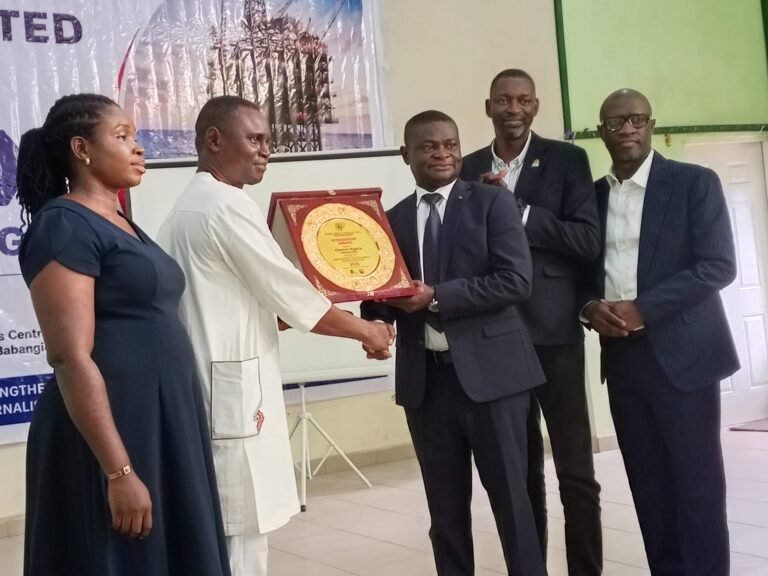
Delta NUJ, Chevron train journalists on oil and gas reporting
The Delta Council of the Nigeria Union of Journalists (NUJ), in partnership with Chevron Nigeria Limited, on Monday, trained 55 journalists on ethical, responsible and professional reporting of the oil and gas sector.
The one-day workshop, with the theme, “Enhancing Professional Skills and Ethical Standards in Oil and Gas Journalism”, engaged media practitioners from the print, television, radio and online media in Asaba.
In an opening remark, the Chevron General Manager, Corporate Affairs, Mr Oduselu Olusoga, said the company prioritised the training of journalists to equip them with the right information and skills to report responsibly.
Olusoga, represented by the Manager Communication, Dr Victor Anyaegbudike, said the company had engaged in training journalists for the past 12 years.
According to him, over 4,000 journalists had been trained on the industry reporting.
He said: “Chevron decided to do a training for journalists in the past 12 years on reporting in energy, oil and gas industries because it is a very sensitive industry.
“The industry is very complex. It is also economically important and critical to Nigeria, so what happens to the energy industry will affect the whole country.
“That is why we have looked at that sector and said it is important that those who report this sector must first of all have the capacity to be able to analyse trends, advise government, and counsel our stakeholders by reporting objectively, responsibly and in responsive manner.
“That is the essence we are here, when others are thinking of different kinds of things, Chevron is thinking of building capacity because only an equipped journalist can stand before any stakeholder, government with the right information.
Olusoga said that the company had been in Nigeria for 60 years, engaged the communities and deployed Global Memorandum of Understanding to deliver to the needs of the host communities, and partnering other stakeholders to deliver on best practices.
He also said that Chevron had in the past 10 years achieved 98 per cent gas flare down in all its facilities, thereby making gas available at different locations for use.
He gave assurance that the company would soon attain 100 per cent gas flare out in all its facilities in the country.
He urged journalists to verify all information, ensure accurate reporting of the sector in order not to misinform the public, stakeholders and the government.
Read Also: Election aftermath: Oyetola remains Osun APC political leader –…
Earlier, the Chairman, Delta Council of NUJ, Mr Churchill Oyowe, thanked Chevron for the partnership in the capacity-building programme at a time the oil and gas industry is central to Nigeria’s economy, energy security and national development.
Oyowe said: “As journalists, our responsibility goes beyond reporting events.
“We are expected to provide the public with accurate, balanced, credible and well-contextualised information.
“This responsibility becomes even more critical when reporting an industry as technical, sensitive and economically significant as oil and gas.”
He said that oil and gas journalism required more than the ability to write a good story but an understanding of the industry’s value chain, regulatory framework, environmental concerns, community relations, energy transition and the complex economic issues surrounding the sector.
Oyowe urged the participants to take full advantage of the training, ask relevant questions and share experiences and engage the facilitators properly.
Some journalists, who spoke in an interview at the end of the training, lauded Chevron and the NUJ for impacting them with requisite knowledge.
They urged other companies in the industry to emulate Chevron in building the capacity of journalists.
The News Agency of Nigeria (NAN) reports that lectures at the workshop centred on keeping to professional standards, ethics, health, safety, and environmental sustainability, among others.
