
Nwagwu @ 60: Leaders advocate inclusive democracy, strong institutions

Nwagwu @ 60: Leaders advocate inclusive democracy, strong institutions
Political leaders, labour officials and civil society advocates have called for institutional reforms and economic inclusion to strengthen Nigeria’s democracy.
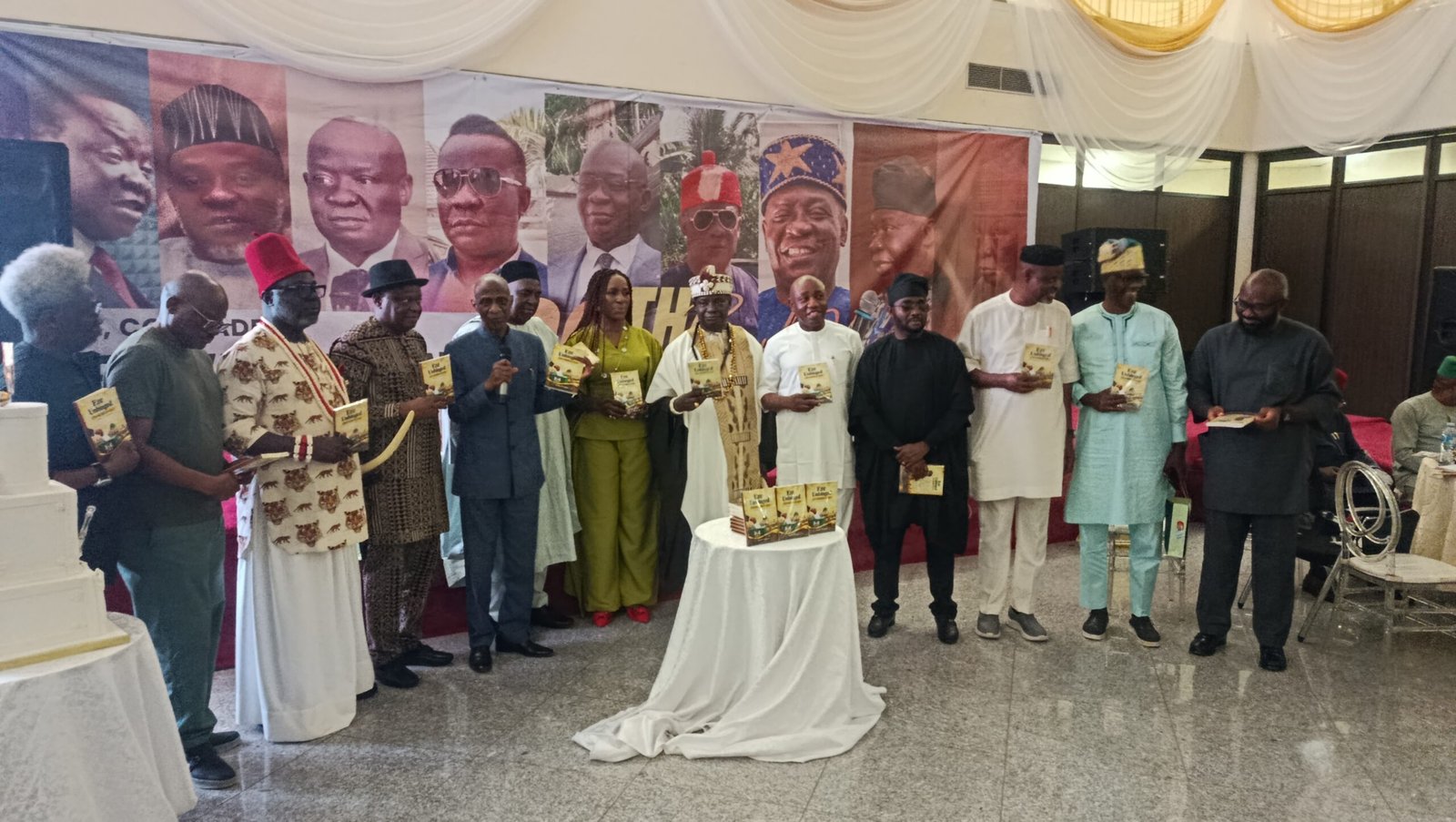
They made the call at a colloquium, book launch and dinner in Abuja on Monday to mark the 60th birthday of Ezenwa Nwagwu, Executive Director of the Peering Advocacy and Advancement Centre in Africa (PAACA).
In a keynote address titled “Citizenship, Institutions and the Imperative of Inclusive Democracy in Nigeria,” Gbenga Olawepo-Hashim of the Accord Party said democracy must go beyond elections to guarantee equal rights, economic opportunities and meaningful citizen participation.
Olawepo-Hashim, recently declared the party’s 2027 presidential candidate by the Federal High Court in Abuja, was represented by Prof. Abiodun Adeniyi, Vice-Chancellor of Baze University, Abuja.
He said political participation remained incomplete while millions of Nigerians faced economic deprivation.
“Inclusive democracy rests on the understanding that democracy must mean more than elections. It must guarantee citizens the freedom to participate in public life, compete under fair rules, exercise their rights, and enjoy equal treatment before the law,” he said.
To ease economic hardship, Olawepo-Hashim proposed an “Energy First” framework to reduce domestic fuel prices, targeting an initial petrol price of N605 per litre and a gradual reduction to between N200 and N300.
He also expressed concern over declining voter turnout, which he said fell from 69.08 per cent in 2003 to 26.71 per cent in 2023.
He called for an end to discrimination based on indigeneity, arguing that long-term residents should enjoy full rights, regardless of their state of origin.
Olawepo-Hashim further urged political parties to promote genuine participation through credible primaries and transparent financing rather than operate as private platforms for privileged interests.
Read Also: Insecurity: Stakeholder explains why telecoms restoration is…
In his welcome remarks, Prof. Isa Chiroma, immediate past Director-General of the Nigerian Law School and chairman of the colloquium, said addressing Nigeria’s governance challenges required stronger public institutions, broader economic opportunities and national unity.
“We must move from an era of strongmen to an era of strong institutions.
“Our judicial, electoral, and law enforcement institutions must be fiercely independent, financially autonomous, and structurally insulated from political interference,” Chiroma said.
He warned that widespread poverty could make democracy vulnerable to vote-buying and manipulation, stressing that political inclusion must be supported by economic opportunities.
“We must build an economy that guarantees basic social safety nets, qualitative education, and job opportunities for our massive youth population,” he said.
Chiroma praised Nwagwu’s public service and intellectual engagement, urging policymakers to translate the discussions into practical policies.
Similarly, Mr Joe Ajaero, President of the Nigeria Labour Congress (NLC), commended Nwagwu’s contributions to democracy, electoral reforms and workers’ welfare.
Ajaero said Nwagwu had remained actively involved in major national actions and efforts to improve the welfare of workers and ordinary Nigerians.
“There is no successful nationwide action in this country that Nwagwu is not a part of. In terms of improving the welfare of the working people of Nigeria and the masses, Nwagwu is involved,” he said.
The event featured the unveiling of a book authored by Nwagwu, titled “Eze Unhinged Elections and Reforms: A Participant’s Views and Reflections,” and a panel discussion on Citizen-Led Democracy.
